Turning a Terminal into a Community Hub: How Explorers Preschool Is Reimagining The Wilds at Barking Riverside
In Barking Riverside, an Envac waste collection terminal shares a home with something unexpected: a vibrant preschool that’s teaching children about community, sustainability and the value of the spaces around them.
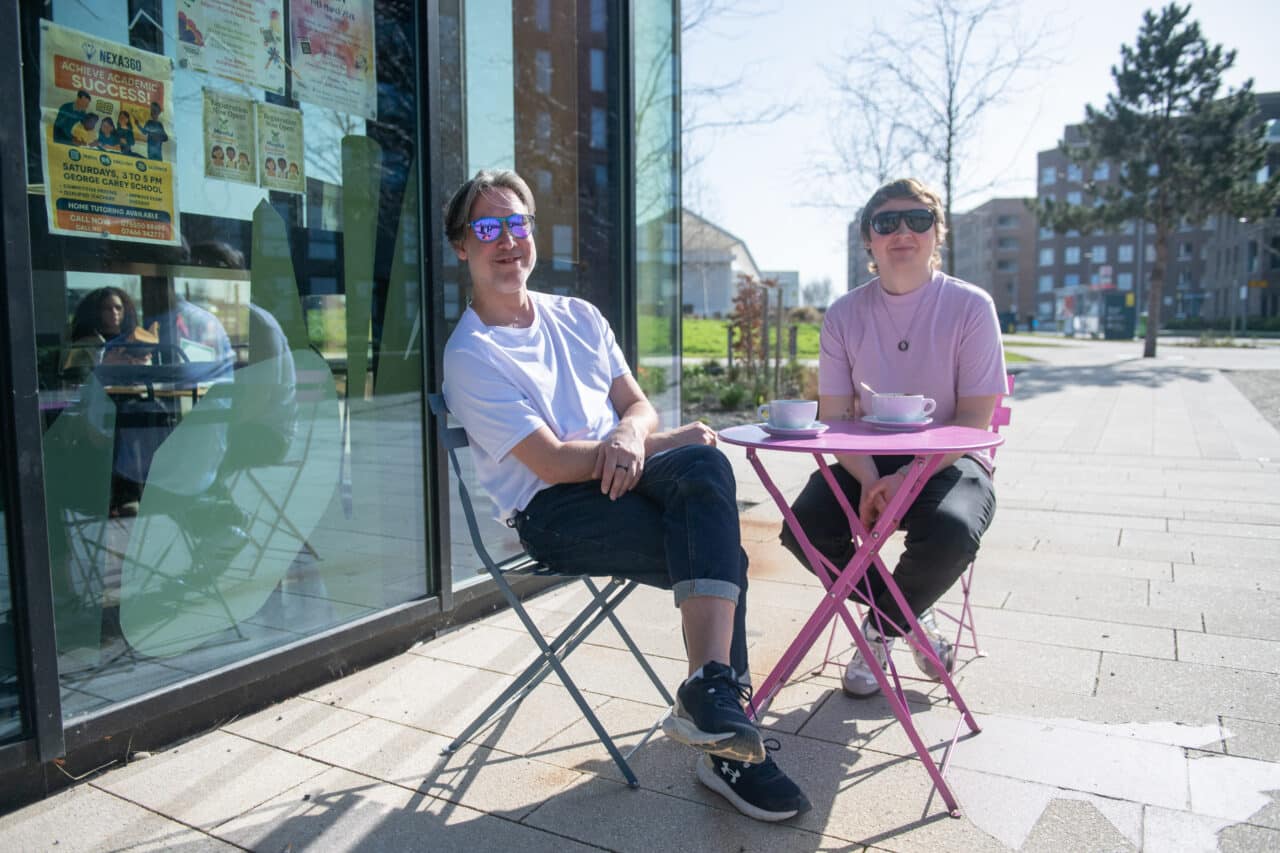
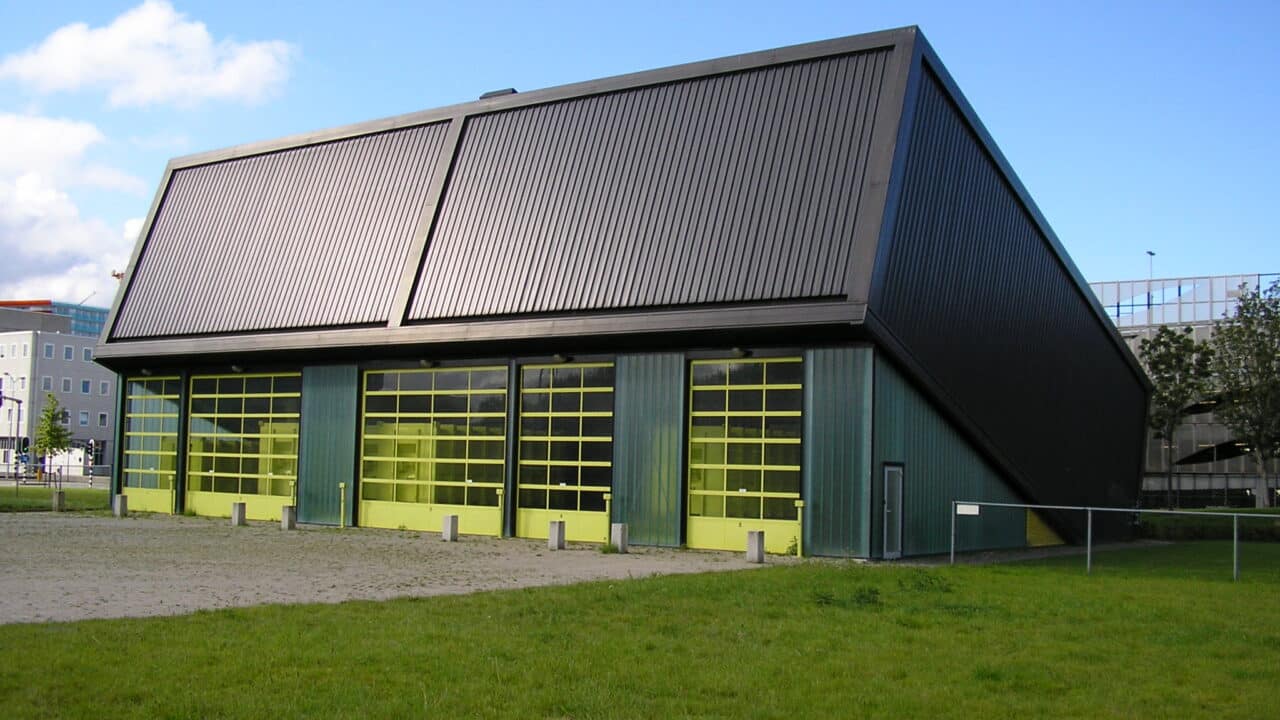
At The Wilds, a multi-purpose community, ecology and events space delivered by Barking Riverside Limited, the Envac terminal is not tucked away in an anonymous shed. Instead, it sits within an award-winning building that also houses workspaces (where the Envac UK office is also located), a local café, events and, importantly, an inclusive early years setting: Barking Riverside Explorers Preschool, part of the SENspired family of services.
Led by Preschool Owner and Managing Director of SENspired, Shay Orr together with Preschool Manager Julia Bermingham, Explorers is built on the belief that children learn best when they feel connected – to their environment, their community and to each other. SENspired’s approach brings together preschool provision, specialist SEND/LSEN expertise, parent-and-child sessions and consultancy, all focused on creating inclusive, community-driven early years experiences. Shay’s entrepreneurial journey, building a setting that is both inclusive and rooted in its community, aligns naturally with the ambitions of Barking Riverside and The Wilds. Her preschool doesn’t just occupy space in the building; it actively shapes how the building is used and understood.
This makes The Wilds the perfect place to show that terminal buildings can be so much more than out-of-the-way infrastructure. Here, the Envac system is part of daily life in a positive and visible way – and it is becoming part of how local children learn about environmental responsibility from the very start.
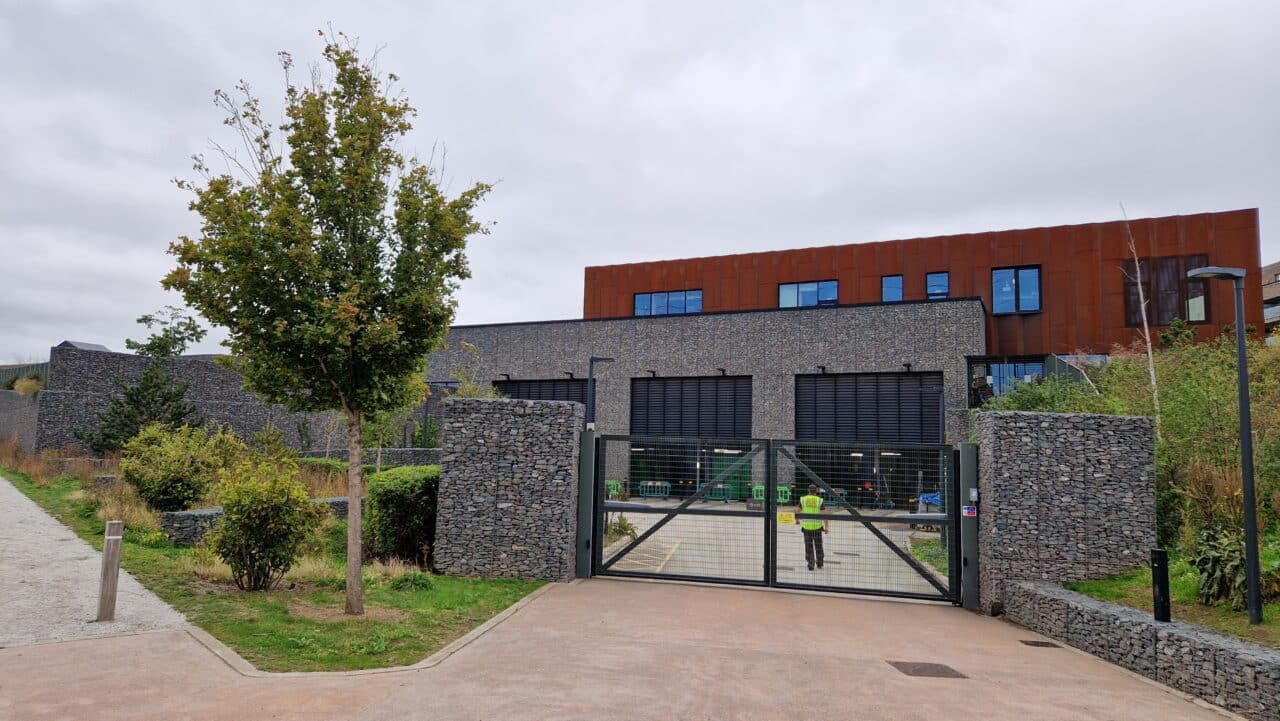
The Wilds at Barking Riverside, Envac terminal entrance
Beyond “ugly outbuildings”: terminals as social infrastructure
Around the world, waste collection infrastructure is often hidden, placed at the edge of developments and designed to be ignored. At Barking Riverside, the ambition was different. The Wilds was created as a space where residents could meet, learn, work and play, with sustainability and social impact built into its very concept.
For Envac, integrating its terminal into The Wilds is about more than operational efficiency. It is a statement that clean, well-designed, automated waste systems are a core part of liveable, future-focused neighbourhoods and that the buildings which host them can actively add value to community life.
By sharing a home with a preschool and wider community activities, the terminal becomes a piece of social infrastructure: a place that supports everyday life, sparks conversations and helps residents, including the youngest ones, understand how their city works.
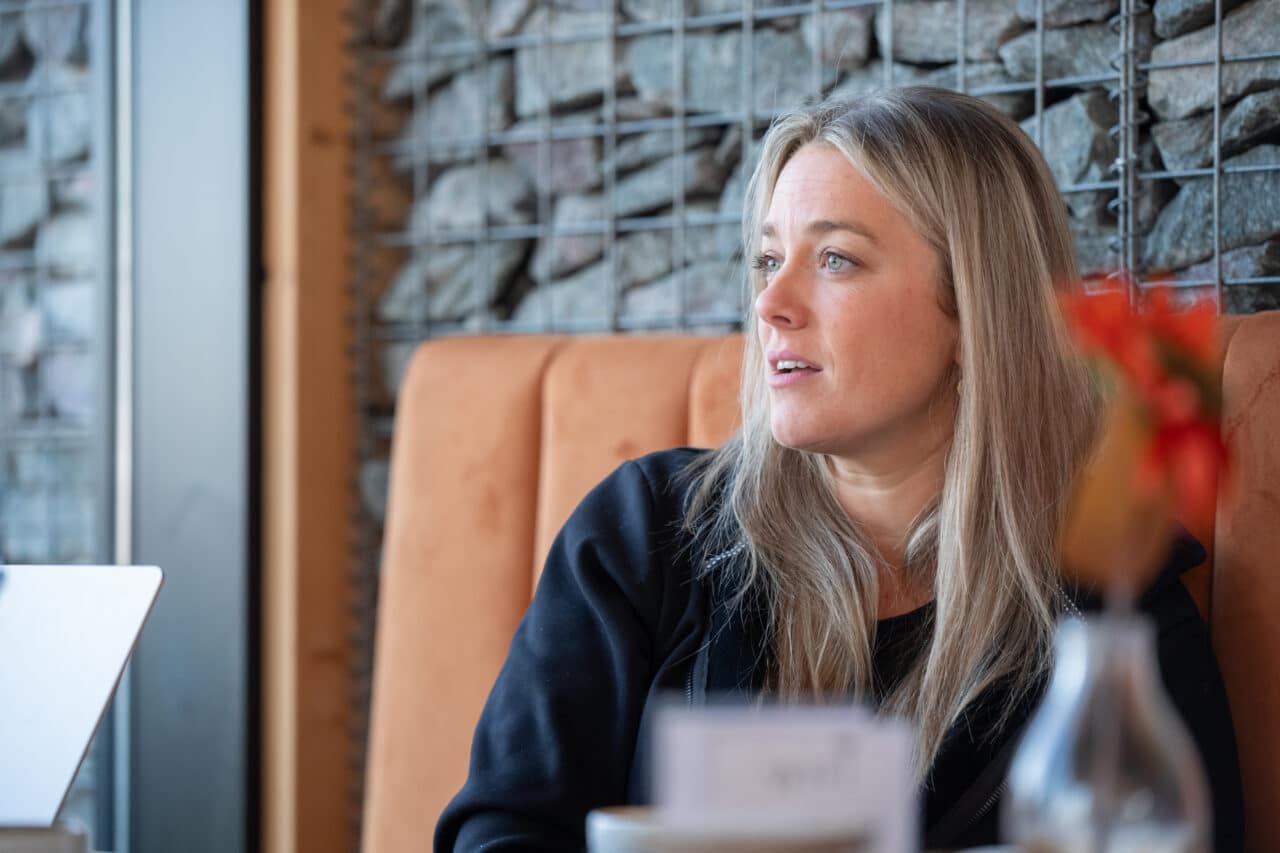
Shay Orr, Preschool Owner and Managing Director of SENspired
Explorers Preschool
Explorers Preschool at The Wilds is deeply rooted in inclusion, community and child-centred learning. SENspired describes its work as “more than a preschool” – a connected ecosystem that supports children, families and educators through holistic, inclusive practice. From the carefully designed learning environments to the focus on communication, confidence and belonging, everything is geared towards helping children see themselves as capable contributors to their world. That includes understanding the systems that keep their neighbourhood clean and sustainable.
“Our vision has always been to place children at the centre of community life, not separate from it. When children can see, experience and engage with the real world around them, learning becomes meaningful, empowering and rooted in a genuine sense of belonging”
“We’ve always believed that an Envac terminal should be a good neighbour. At Barking Riverside, we had the opportunity to prove that these buildings can be beautiful, useful and open, not just boxes that sit in the background of a development.”
– Dave Buckley, Managing Director, Envac UK
A visit to the Envac terminal: waste, wonder and real-world learning
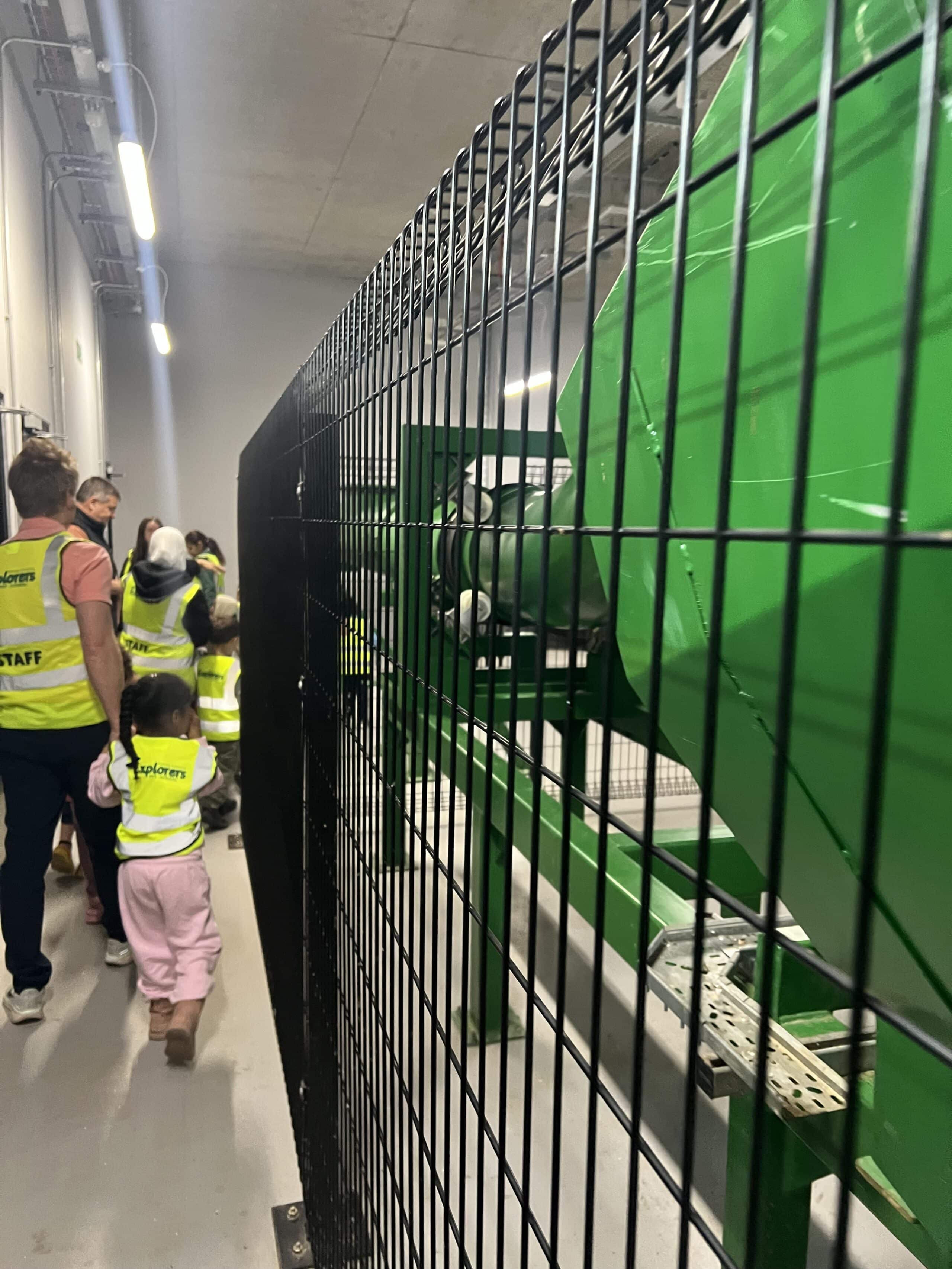
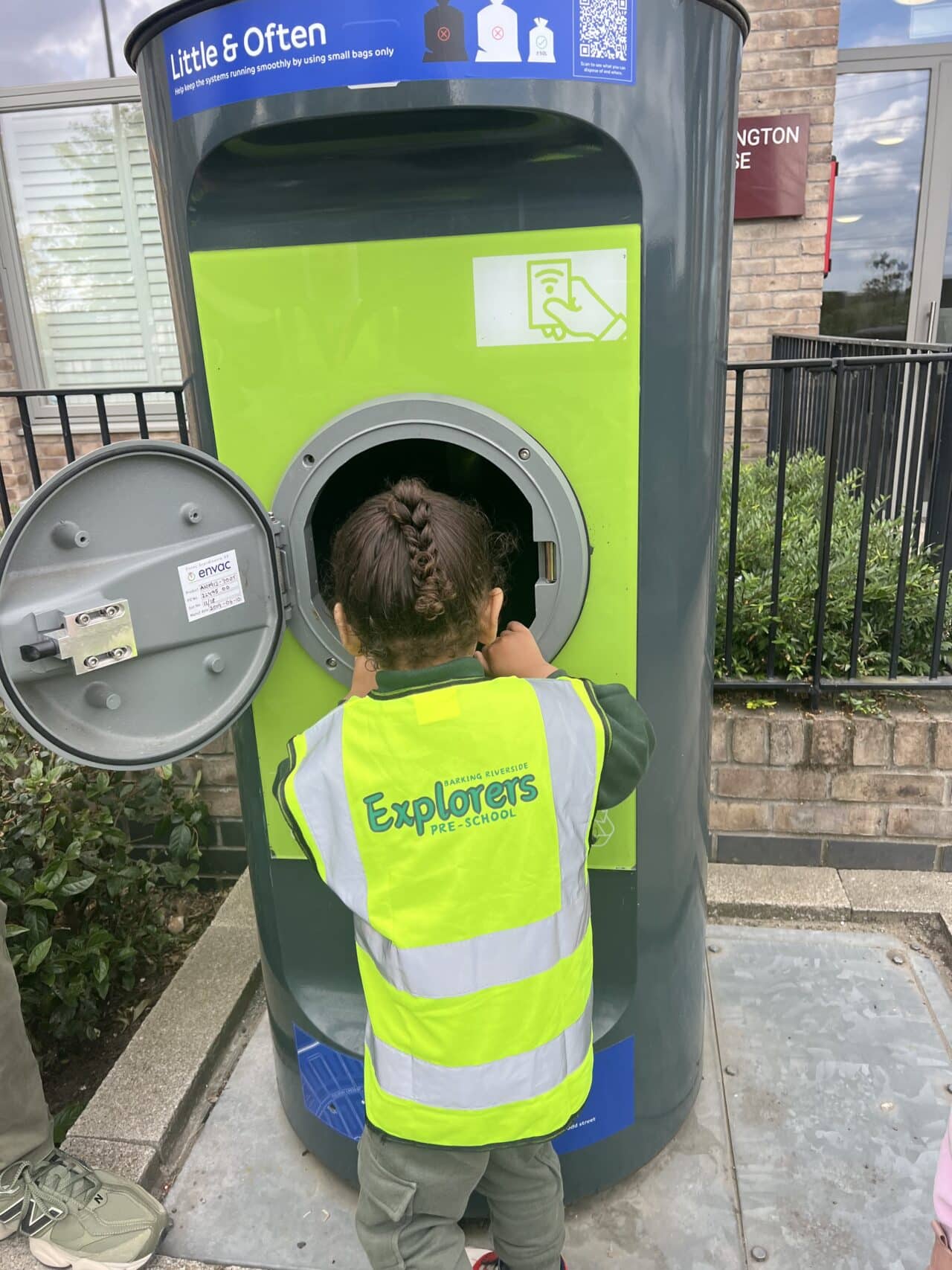
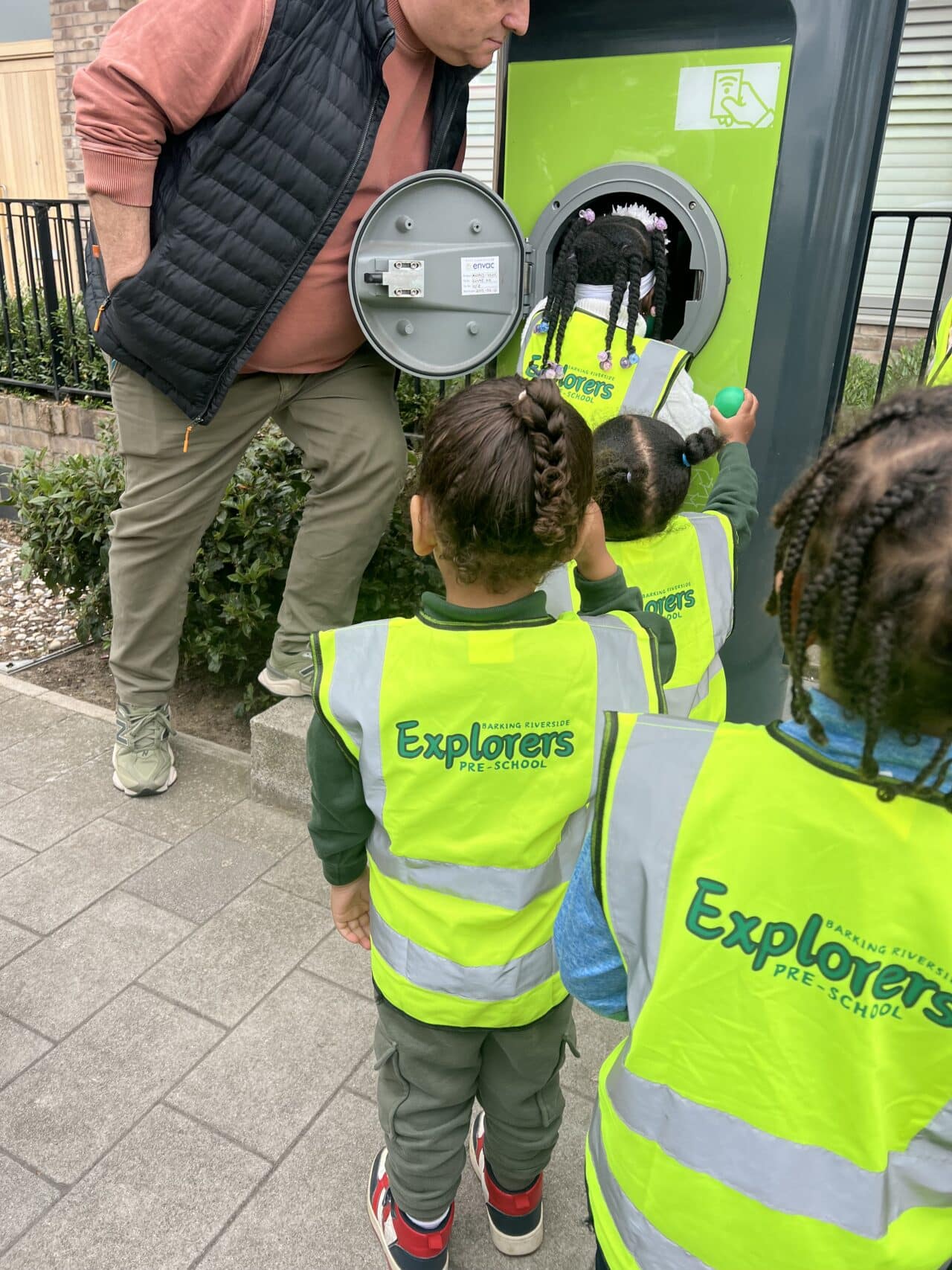
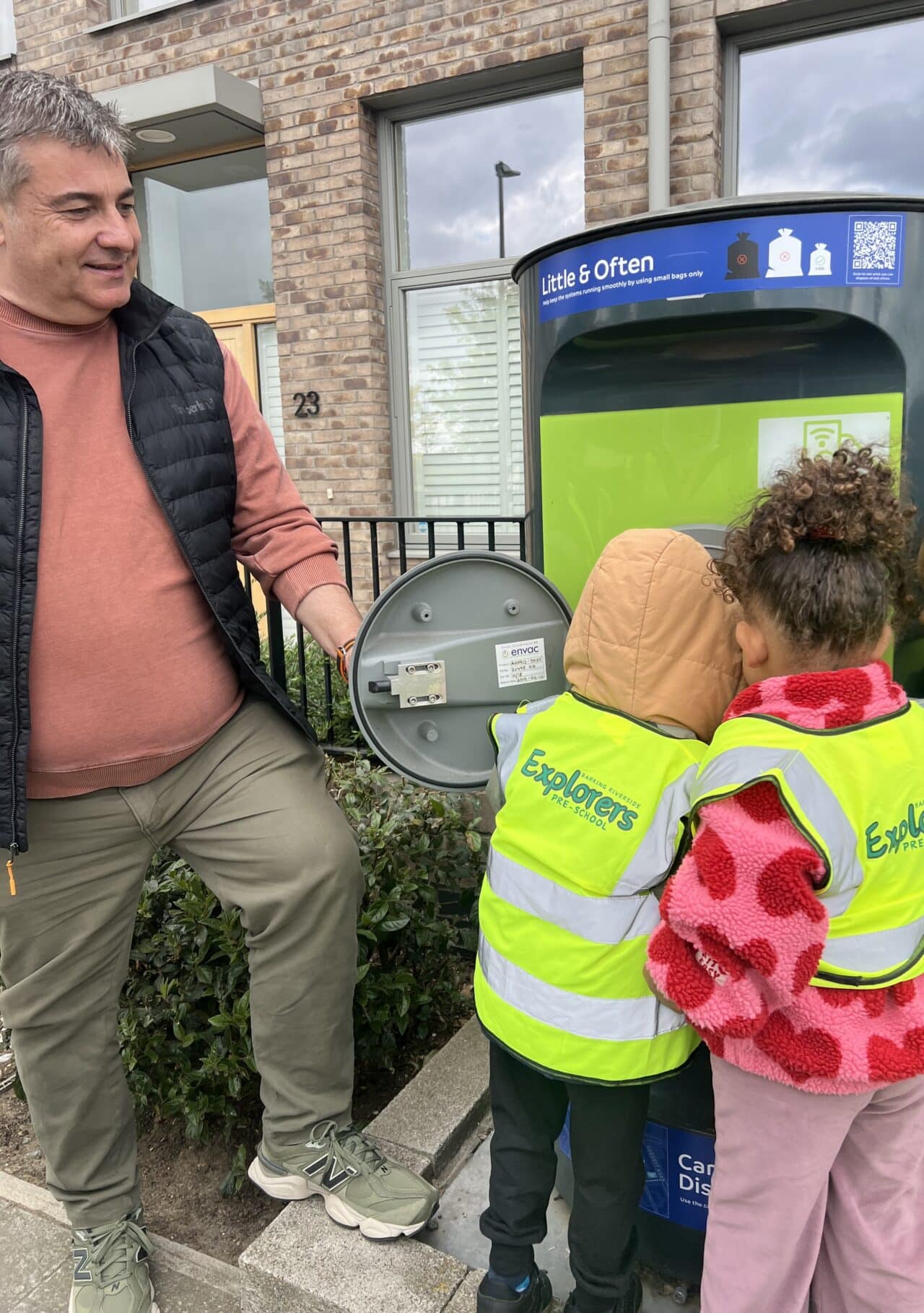
Recently, Shay, Julia and their team took a group of Explorers Preschool children downstairs to visit the Envac terminal housed within The Wilds. For many, it was their first time seeing “what happens next” after rubbish leaves the bin.
The visit turned the terminal from an abstract idea into a tangible learning experience:
Children saw the inlets and pipework that quietly move waste below ground through the Envac system.
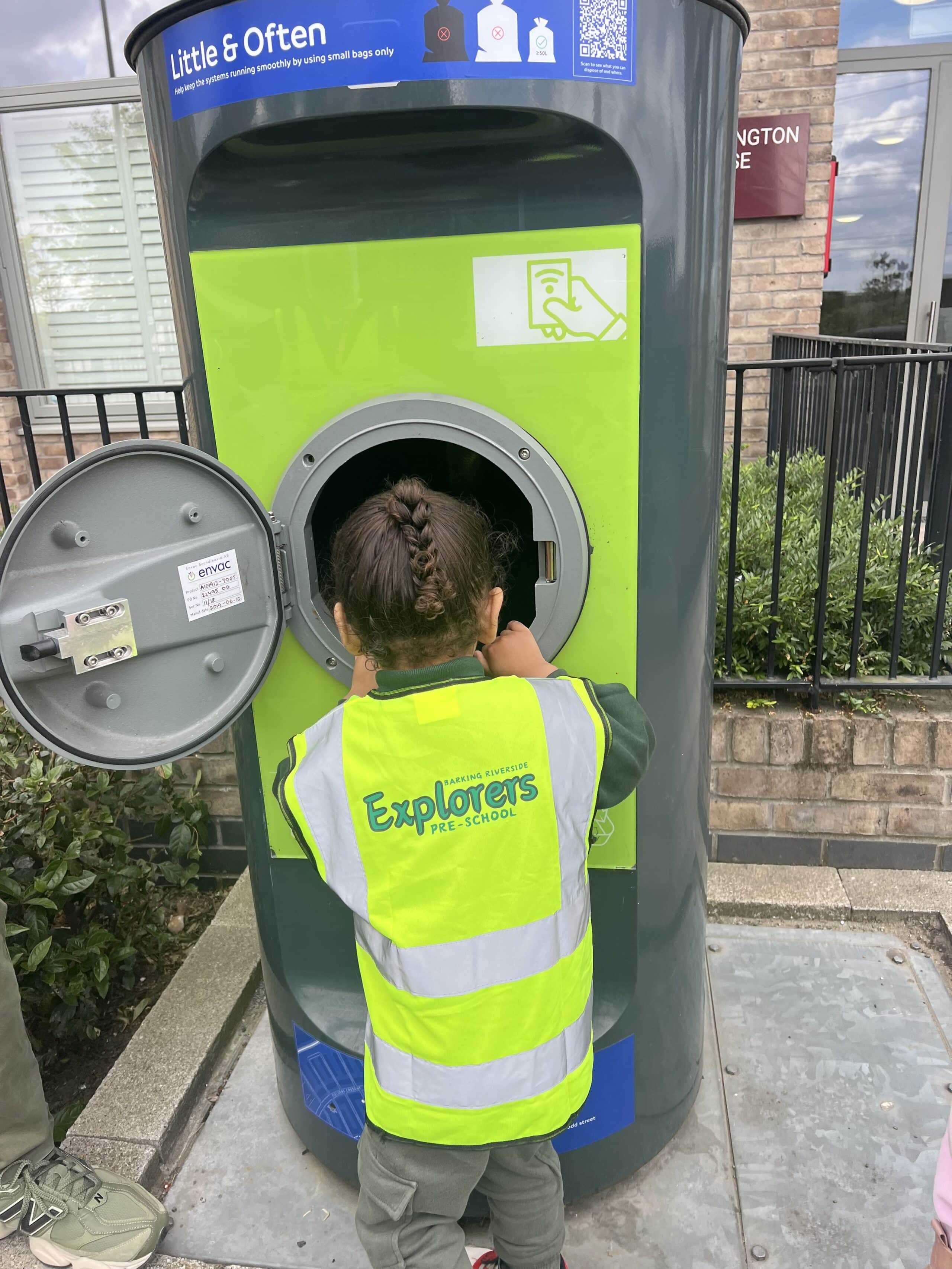
The children even got to throw away some “trash” in the form of little plastic balls to see where they end up.
The group were shown how different waste streams are separated, and why it matters to put the right things in the right bins.
Educators connected what the children saw to everyday actions in the classroom and at home: sorting, recycling, re-using and reducing waste.
Back in the preschool, Shay’s team extended the learning through play, role-play “recycling stations,” sorting games, stories about caring for the planet and conversations about where things go when we “throw them away.” By making the system visible and understandable, the visit helped children connect personal responsibility with shared infrastructure. Instead of a mysterious building they walk past, the terminal becomes part of “their” place, something they are proud of and curious about.
“Watching children stand in front of a terminal and realise, ‘Oh, my banana skin actually goes somewhere,’ is incredibly powerful. It turns sustainability from a slogan into something concrete and exciting. They see that their choices matter, even at four or five years old.”
– Dave Buckley, Envac UK
Teaching recycling and responsibility from the start
Photos by Shay Orr showing Explorers Preschool visit to the Envac inlets in Barking Riverside, shown here by Dave Buckley, Envac UK.
Early exposure to recycling and waste handling can shape lifelong habits. Through Explorers Preschool and the wider SENspired approach, these lessons sit naturally within play-based, inclusive learning rather than as one-off events.
Children are encouraged to:
Sort materials in classroom activities and understand simple categories like “rubbish” and “recycling”.
Talk about where items come from and what happens when we no longer need them.
Relate small actions, like putting packaging in the right bin, to bigger ideas about looking after animals, rivers and the planet.
The proximity of the Envac terminal makes these concepts immediately real. Teachers can reference “the big machine downstairs” when they talk about waste. Families can have conversations at home that link directly back to what their children have seen and done at The Wilds.
“What’s been really special is seeing how the learning travels beyond the preschool walls. Children are going home excited to talk about recycling, waste systems and caring for their environment, and parents are telling us it’s sparked meaningful conversations at home.”
– Shay Orr, Preschool Owner and Managing Director of SENspired
Passionate people, powerful partnerships
The story of Explorers Preschool at The Wilds is, at its heart, a story of entrepreneurship and partnership. On one side, there is Shay, an early years entrepreneur and inclusion advocate building an offering that goes far beyond traditional preschool provision, bringing together SEND expertise, training, resources and community-driven early years experiences. On the other, there is Envac and its partners at Barking Riverside, committed to embedding advanced waste collection systems into the fabric of new developments, not just technically, but socially and architecturally.
Together, they demonstrate that terminal buildings don’t need to be hidden away. Instead, they can host learning, play, coffee, meetings, classes and creative projects, becoming landmarks that residents are proud of, rather than structures to ignore.
“When you combine passionate people with well-designed infrastructure, you create something much bigger than the sum of its parts. Shay and her team show what’s possible when you put children, families and community at the heart of a building that also houses critical city systems.”
– Dave Buckley, Envac UK
The world around Envac: looking ahead
The Wilds at Barking Riverside is a glimpse of what future neighbourhoods can look like when waste infrastructure, community spaces and early years provision are designed to work together. Envac’s systems remain efficient, hygienic and largely invisible in day-to-day operation, but the building they sit in is anything but invisible.
It is a place where:
Families drop children at a nurturing, inclusive preschool.
Residents stop for a coffee, join classes or events, and use flexible spaces for work or gatherings.
Children learn, from their earliest years, that caring for their community includes understanding what happens to their waste.
For Envac, this is what “the world around Envac” can and should be: a system that is fully integrated into the social life of cities, enabling not only cleaner streets but also stronger communities, more engaged citizens and a new generation who see sustainability as part of everyday life.
Explore the businesses and people who contributed to this article:
When stadium waste is managed well, most people barely notice it. When it is managed badly, everyone does. Overflowing bins, odours, litter, cluttered concourses and collection vehicles moving through busy areas can all affect how a venue feels and performs. For modern stadiums, the question is no longer simply, “Where do we put the bins?” It is, “How can waste infrastructure support a cleaner, safer, more efficient and more flexible venue?”
The Netherlands is often seen as a frontrunner in recycling, yet municipalities still struggle with growing waste volumes, stubborn residual streams, overflowing underground containers and rising costs. This article shows how data‑driven operations, Envac automated waste collection systems (AWCS) and Envac sorting solutions, already proven in Dutch projects such as Almere and Arnhem, can help cities move from day‑to‑day firefighting to more future‑proof, integrated waste infrastructure.
Healthcare providers face immense pressure to deliver high-quality care while maintaining a smooth patient flow, which is crucial for keeping healthcare-associated infections (HAIs) low and preventing nurse burnout. Additionally, there is a constant need to improve infection control, maximise clinical efficiency, and expand capacity—all while adhering to strict budgetary limits. However, an often-overlooked aspect that can undermine these goals is how hospitals manage their soiled flow logistics.