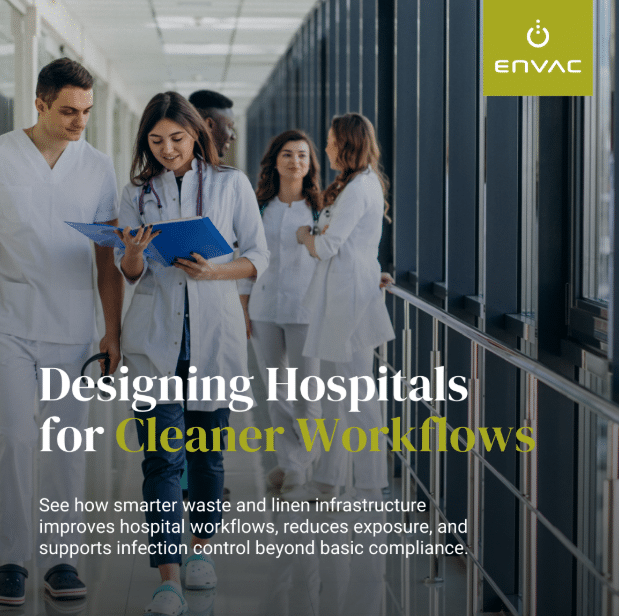
Hospitals are designed to support healing, safety, and efficiency. Yet behind the scenes, many facilities still rely on manual waste and linen transport systems that introduce unnecessary risk and inefficiency into daily operations.
Carts move through hallways. Bags are lifted and pushed across departments. Waste and soiled linens pass through shared elevators and corridors used by patients and staff. While these processes may feel routine, they carry hidden costs that affect infection control, employee safety, and overall hospital performance.
As healthcare systems modernize, many are reexamining how waste and linens move through their buildings.
Why Manual Transport Creates Risk
Manual waste and linen transport increases contact points throughout a hospital. Carts touch doors, elevator buttons, and walls. Bags brush against surfaces and clothing. Each step creates an opportunity for contamination to spread beyond the point of origin.
Gravity chutes, often used in older facilities, add another layer of risk. Airflow can move contaminants between floors, and chute rooms often become sanitation challenges due to residue and odor buildup. These systems were not designed to meet modern infection prevention standards.
When waste handling relies on people moving materials through shared spaces, maintaining consistent hygiene becomes significantly more difficult.
The Impact on Staff Safety and Efficiency
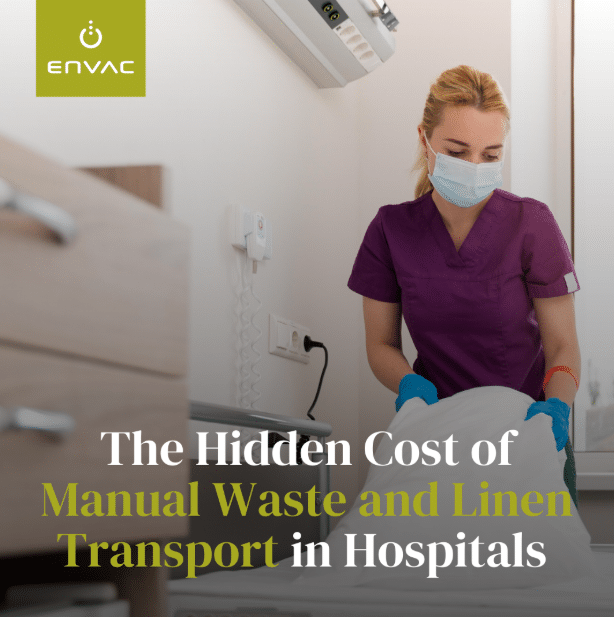
Manual transport is also physically demanding. Staff lift heavy bags, push loaded carts, and walk long distances throughout their shifts. Over time, this contributes to strain injuries, fatigue, and higher risk of accidents.
In busy hospitals, these tasks pull staff away from patient care and other critical responsibilities. Waste handling becomes a recurring interruption rather than a controlled process.
Automated systems eliminate these inefficiencies by removing transport duties from clinical staff altogether.
How Automation Changes Hospital Workflows
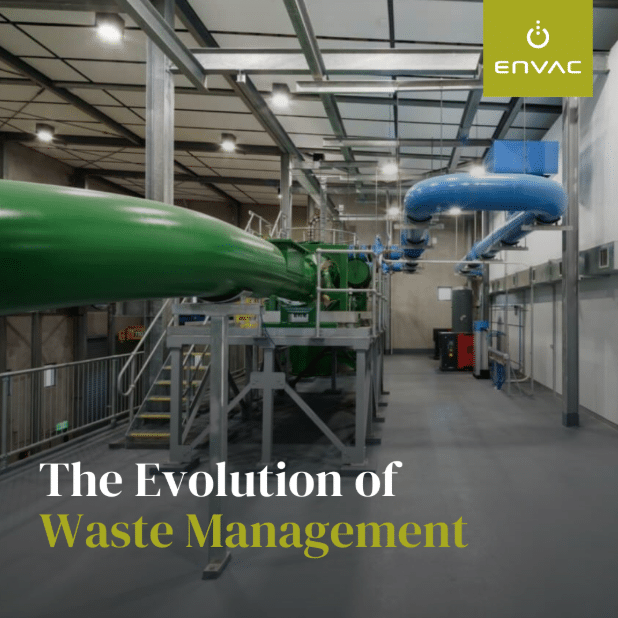
Automated waste and linen systems move materials through sealed infrastructure rather than hallways. Staff deposit waste or linens into dedicated inlets located near points of use. From there, the system transports materials directly to a central collection or laundry area.
This approach delivers immediate benefits. Hallways stay clear. Shared elevators are not used for waste transport. Exposure points are reduced, and materials are removed quickly from patient care areas.
Envac’s healthcare solutions are designed to support these cleaner workflows while integrating into both new and existing hospital buildings.
Learn more about automated waste and linen systems for healthcare:
https://www.envacgroup.com/segments/healthcare/
Supporting Infection Control Goals
Reducing manual handling supports stronger infection control by limiting surface contact and airborne exposure. Waste remains enclosed from disposal to collection, reducing odor, bacteria spread, and cleanup needs.
In high-risk areas such as emergency departments, surgical suites, and isolation units, these improvements are especially valuable. Automation helps hospitals maintain consistent hygiene standards across every department.
Designing for Long-Term Performance
Hospitals are long-term assets. Infrastructure decisions made today affect operations for decades. Automated waste and linen systems free up valuable space by eliminating large chute rooms and staging areas, allowing facilities to reclaim square footage for patient care or support services.
Many hospitals assume automation is only viable for new construction. In reality, systems can often be retrofitted with minimal disruption using flexible routing options behind walls, in ceilings, or through service corridors.
Envac’s experience retrofitting automated systems into complex healthcare environments is outlined here:
https://www.envacgroup.com/us/envac-city/
A Smarter Approach to Hospital Operations
Manual waste and linen transport introduces risk, cost, and inefficiency into healthcare environments. Automation removes these challenges by treating waste as infrastructure rather than a recurring task.
Hospitals that adopt automated systems benefit from cleaner corridors, safer staff workflows, stronger infection control, and more efficient operations. As healthcare demands continue to grow, eliminating manual transport is becoming an essential step toward safer, more resilient hospital design.