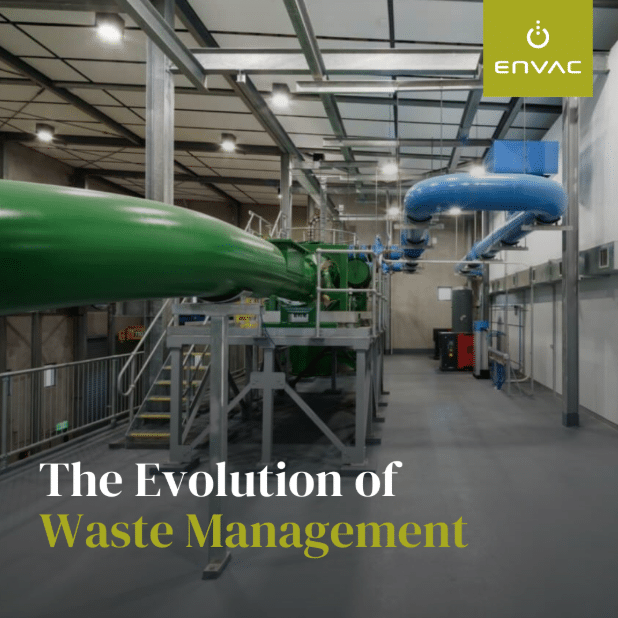
Many hospitals, municipalities, and mixed-use developments rely on pneumatic waste collection systems installed decades ago. At the time, these systems represented advanced infrastructure. They improved hygiene, reduced truck traffic, and streamlined operations.
But infrastructure does not stand still.
As systems age, spare parts become discontinued, control platforms become obsolete, and original manufacturers may no longer provide support. What was once a reliable backbone of operations can quietly become a growing liability.
Modernization is not about replacing a proven concept. It is about protecting it.
Looking to learn more? Check out our in depth guide about Modernizing Legacy Waste Collection Systems.
The Problem Is Not the Pipes. It Is the Platform
Most aging systems still have structurally sound pipe networks. The issue is rarely the underground infrastructure itself. The real challenges tend to emerge in three areas:
Obsolete PLCs and control interfaces
Discontinued spare parts
Limited or nonexistent technical support
Legacy control systems may be incompatible with modern IT infrastructure. Diagnostics are limited. Remote monitoring is unavailable. Troubleshooting becomes manual and reactive.
When a failure occurs, replacement components may require custom fabrication or long lead times. Emergency repairs become more frequent. Downtime increases.
Over time, operational strain grows while reliability declines.
Unsupported Competitor Systems Create Operational Risk
In some cases, the original manufacturer no longer supports the installation. Operators are left without technical documentation, standardized parts, or structured service programs.
This creates uncertainty. Maintenance teams are forced to find workarounds. Performance becomes inconsistent. Budgeting becomes unpredictable.
Modernization and retrofit programs stabilize these environments by reintroducing standardized components, updated control systems, and long-term service support.
Envac provides modernization and retrofit solutions for both legacy Envac systems and unsupported competitor installations. Learn more from our guide: Modernizing Legacy Waste Collection Systems
Obsolete Control Systems Limit Visibility and Performance
Control systems are the intelligence of a pneumatic waste network. When those systems are outdated, operators lose visibility into performance metrics, diagnostics, and system health.
Older PLC platforms often:
Lack compatibility with current IT security standards
Provide limited data logging
Require manual intervention for troubleshooting
Cannot integrate with remote monitoring tools
Upgrading to modern automation platforms restores system visibility. Remote diagnostics reduce response time. User-friendly interfaces improve day-to-day management.
Control modernization is often the single most impactful upgrade in aging systems.
Spare Parts Shortages Drive Cost and Downtime
As manufacturers discontinue components, operators face increasing difficulty sourcing replacements. Custom fabrication becomes expensive. Delivery times lengthen. Emergency repairs disrupt operations.
Standardized retrofit components restore serviceability. Instead of improvising solutions, facilities can rely on supported parts designed for long-term availability.
Modernization shifts maintenance from reactive emergency repair to predictable lifecycle management.
Retrofit vs Full Replacement
One of the most common misconceptions is that aging systems require full replacement. In many cases, that is not necessary.
Phased modernization programs allow operators to:
Replace obsolete control systems
Upgrade fans, valves, and critical components
Improve energy efficiency
Extend system life significantly
This approach protects the original infrastructure investment while aligning the system with modern performance expectations.
Envac’s broader experience supporting municipal and district-scale infrastructure demonstrates how modernization extends long-term system value.
Why Waiting Increases Risk
Delaying modernization often leads to escalating emergency repairs, inconsistent performance, and rising operating costs. As parts become scarcer and technical expertise declines, the cost of intervention increases.
Modernization is most effective when planned before failure occurs. Asset assessments and phased upgrades reduce downtime and allow organizations to budget strategically.
Proactive upgrades stabilize performance, improve diagnostics, and protect operations for years to come.
Modernization Protects Proven Infrastructure
Pneumatic waste systems remain one of the most effective ways to manage waste in dense environments. The underlying concept is proven. The challenge lies in keeping aging platforms aligned with modern expectations.
By upgrading controls, standardizing components, and implementing structured service programs, operators can restore reliability and future-proof their systems.
Waste infrastructure should be resilient, supported, and visible. Modernization ensures it stays that way.
Download our Modernizing Legacy Waste Collection Systems Guide today to learn more.