Cities have modernized nearly every essential system. Water flows through underground pipes. Power runs through protected grids. Communications operate through invisible networks. Yet waste collection in many environments still depends on trucks, manual handling, and surface-level access.
As urban environments grow denser and healthcare systems become more complex, traditional truck-based waste collection is showing its limitations. The future of waste management is shifting from service-based models to infrastructure-based systems.
Understanding this evolution is essential for planners, healthcare leaders, and municipalities preparing for long-term growth.
How Traditional Waste Collection Became the Default
For decades, truck-based waste collection was the most practical solution. Cities were less dense, roads were more accessible, and waste volumes were lower. A scheduled route could efficiently serve large areas with minimal disruption.
Hospitals adopted similar approaches internally. Gravity chutes and manual carts were sufficient for smaller buildings and lower patient volumes. At the time, these systems met operational needs.
But environments have changed. Urban density has increased. Healthcare facilities have expanded vertically. Infection control standards are more rigorous. Workforce pressures are greater. What once worked adequately now introduces friction and risk.
The Limits of Surface-Dependent Systems
Truck-based systems depend on ideal conditions. Roads must be accessible. Drivers must be available. Weather must cooperate. When these variables shift, collection is disrupted.
In cities, this means congestion, noise, emissions, and visible sanitation issues. In hospitals, it means manual transport through corridors, shared elevators, and holding rooms that increase contact points.
These systems also consume valuable space. Dumpsters occupy premium real estate. Waste rooms require maintenance and ventilation. Service vehicles interrupt pedestrian flow.
Surface-dependent systems were never designed for high-density, high-performance environments.
The Shift Toward Infrastructure-Based Waste Systems
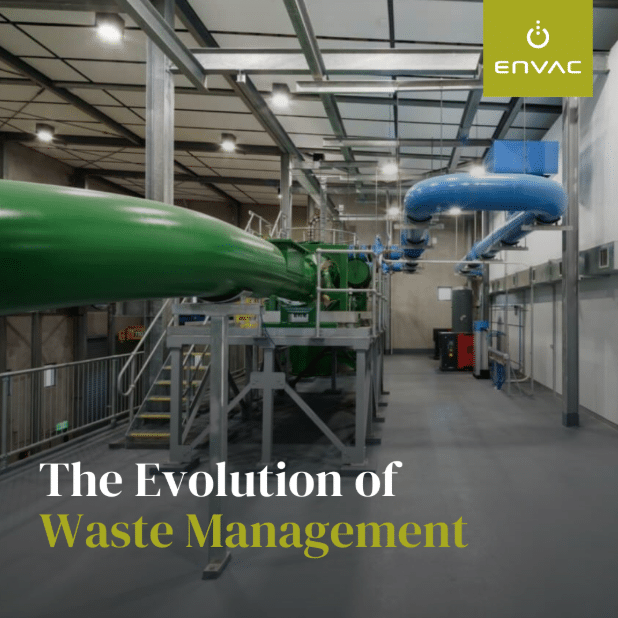
Infrastructure-based systems treat waste like other utilities. Instead of relying on vehicles and manual transport, waste is moved through sealed underground or enclosed pipe networks to centralized collection points.
This model removes daily handling from corridors and public spaces. Waste moves continuously and predictably without disrupting surrounding environments.
Automated waste collection systems operate as fixed infrastructure embedded within the building or district. Learn how automated waste collection works:
https://www.envacgroup.com/what-we-do/automated-waste-collection-system/
By shifting waste transport below ground or behind walls, cities and hospitals reduce noise, emissions, congestion, and exposure.
What This Means for Hospitals
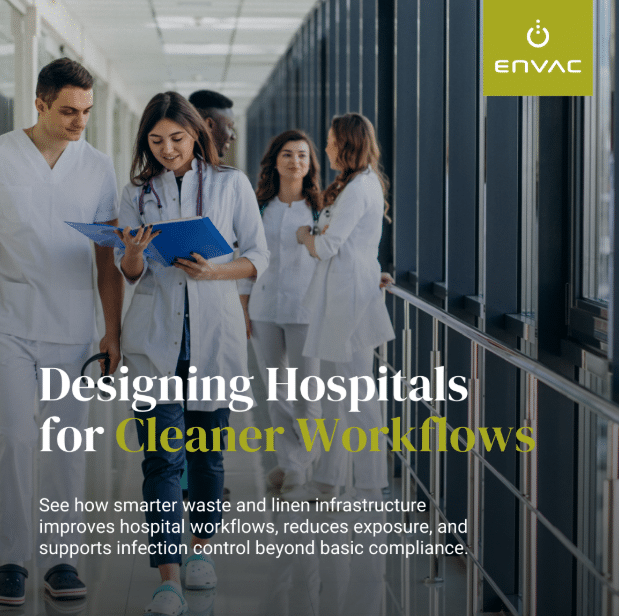
Healthcare facilities generate waste continuously. Manual cart transport increases contact points and physical strain for staff. Gravity chutes, while once innovative, can create sanitation challenges and maintenance burdens.
Infrastructure-based systems reduce manual movement and remove waste from patient care spaces quickly. Hallways remain clear. Shared elevators are preserved for clinical use. Infection control becomes easier to manage because exposure pathways are reduced.
Envac’s healthcare applications demonstrate how automated waste and linen systems support safer and cleaner hospital workflows:
https://www.envacgroup.com/segments/healthcare/
What This Means for Cities
Cities are increasingly focused on walkability, sustainability, and resilience. Truck traffic undermines these goals through congestion, emissions, and visual clutter.
Automated systems reduce the need for frequent truck routes within dense districts. Waste is consolidated at centralized collection points, allowing vehicles to operate at the perimeter rather than circulating through neighborhoods.
This supports cleaner streets, quieter environments, and more reliable operations during disruptions.
Planning for the Next Phase of Urban Growth
Waste infrastructure decisions made today will shape environments for decades. As cities expand and hospitals modernize, relying solely on truck-based systems becomes increasingly inefficient.
The evolution of waste management reflects a broader shift in thinking. Essential systems must operate continuously, safely, and predictably. Embedding waste transport into infrastructure aligns it with the standards applied to water, power, and communications.
The future of waste management is not about improving truck routes. It is about reducing dependence on them entirely.