
Sorting
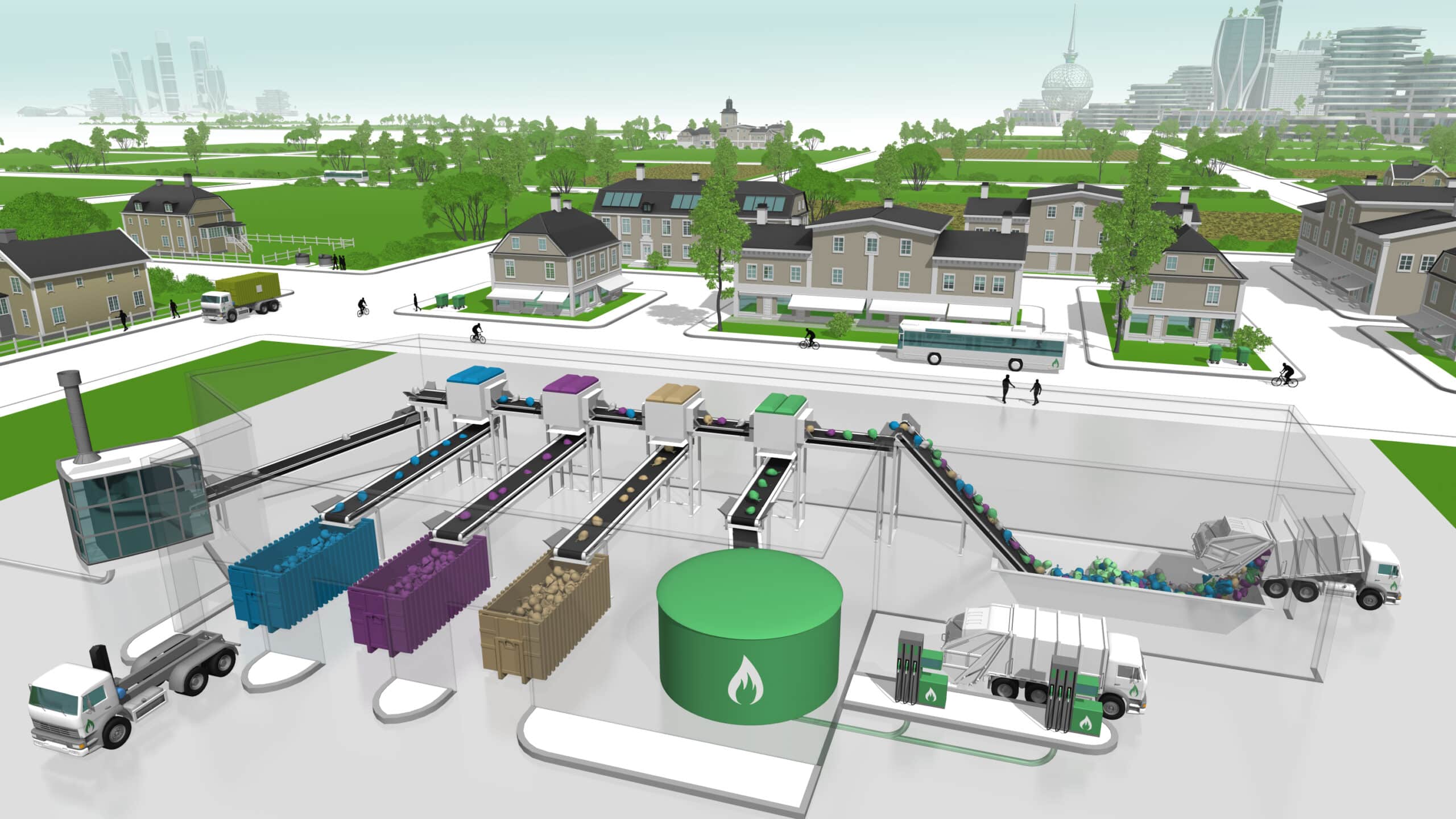
Optical sorting facilities for household waste are advanced systems designed for cost-efficient waste collection and sorting. This technology relies on households source-separating their waste and recyclables into bags of different colours. All bags are collected in one single bin, eliminating the need for additional routing and the already-in-place infrastructure can still be used.
At a central sorting facility, the bags are identified by their colour and diverted from the residual waste stream using cameras and sorting robots. The separated waste fractions are subsequently processed into biomethane or sent to other recycling facilities to produce raw feedstock for new products.
Other Areas


Collection
Envac Sorting can be used with your existing collection method, both manual collection and automated waste systems. The same sorting facility is used regardless of the collection method.
Household Waste
Residual waste or household waste, that is, waste that cannot be recycled as material, is transported to an incineration plant where it is used as fuel to produce district heating and electricity. In countries where waste incineration is not used, the waste is instead sent to landfill.
Further Handling
At the end of the sorting process, the sorted waste streams are collected in a large container. From there, they are transported to a material recycling facility to be reused according to the current requirements and directives in each municipality.
From Waste to Fuel
Organic waste is collected and can be sent to a digestion plant where environmentally friendly biomethane is produced, and has a market as fuel for cars and trucks. This reduces the need for fossil diesel fuel.
Sorting Reception
The bags are transported to a central sorting facility.
From the reception hoppers, the bags are conveyed via conveyor belts to the sorting stations, where they are sorted by colour.
No More Multiple Bins on Your Property
All bags are disposed of in the same container. The container is emptied by your regular refuse truck instead of separate trucks for each stream or type of bin. This reduces emissions and traffic, and as a resident, you avoid having lots of bins on your property to accommodate different stream.
Sorting at Home
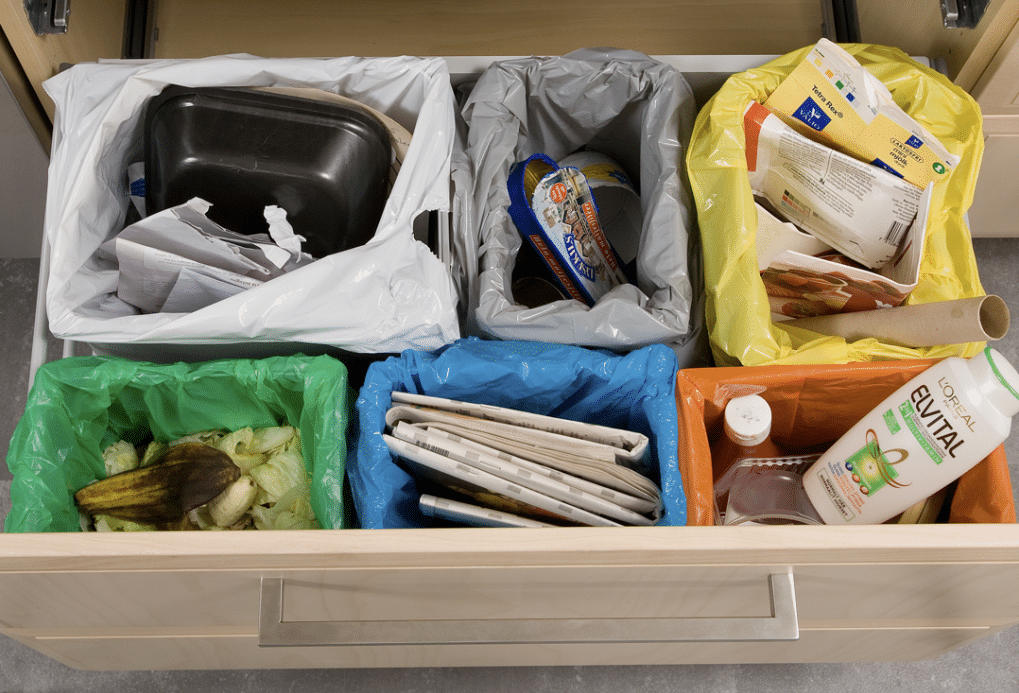
Households sort their waste into different streams at home, using bags of different colours. One colour for each stream (waste type).
For All Types of Areas
Automatic sorting works for all types of areas: cities, rural areas, residential neighbourhoods… Different areas can also collect different numbers of fractions. Many municipalities even share a sorting facility, making it both cost-effective and flexible.
Automatic Sorting
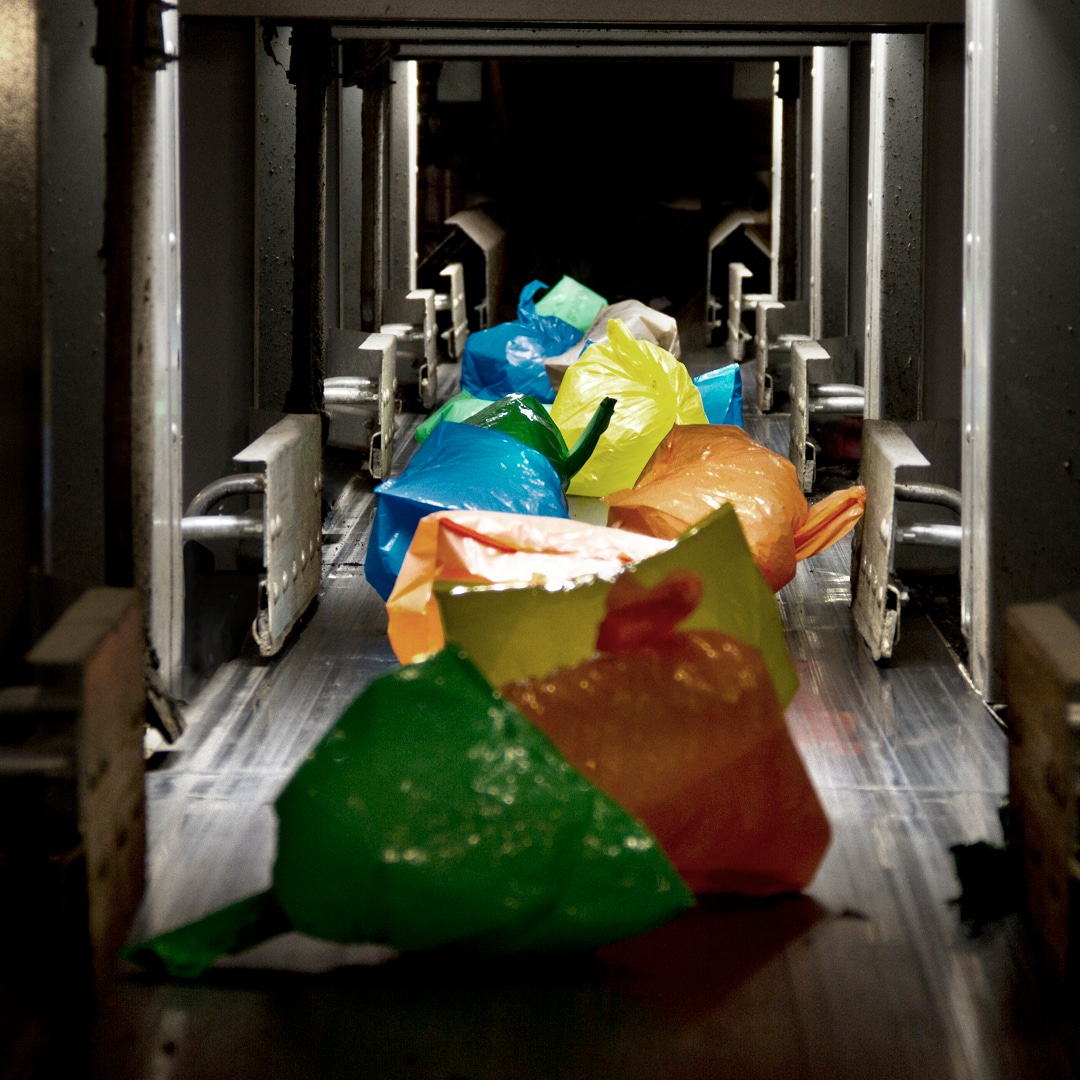
The sorting facility contains various types of technology and sensors that automatically sort the bags by colour and ensure they enter the correct process.
Sorting Projects
Recycling lies at the heart of a circular economy, but old and traditional methods are both challenging and costly. In contrast, our optical sorting solutions can be used by cities of all sizes and reduces transport and collection costs by at least 50% compared to competing systems.
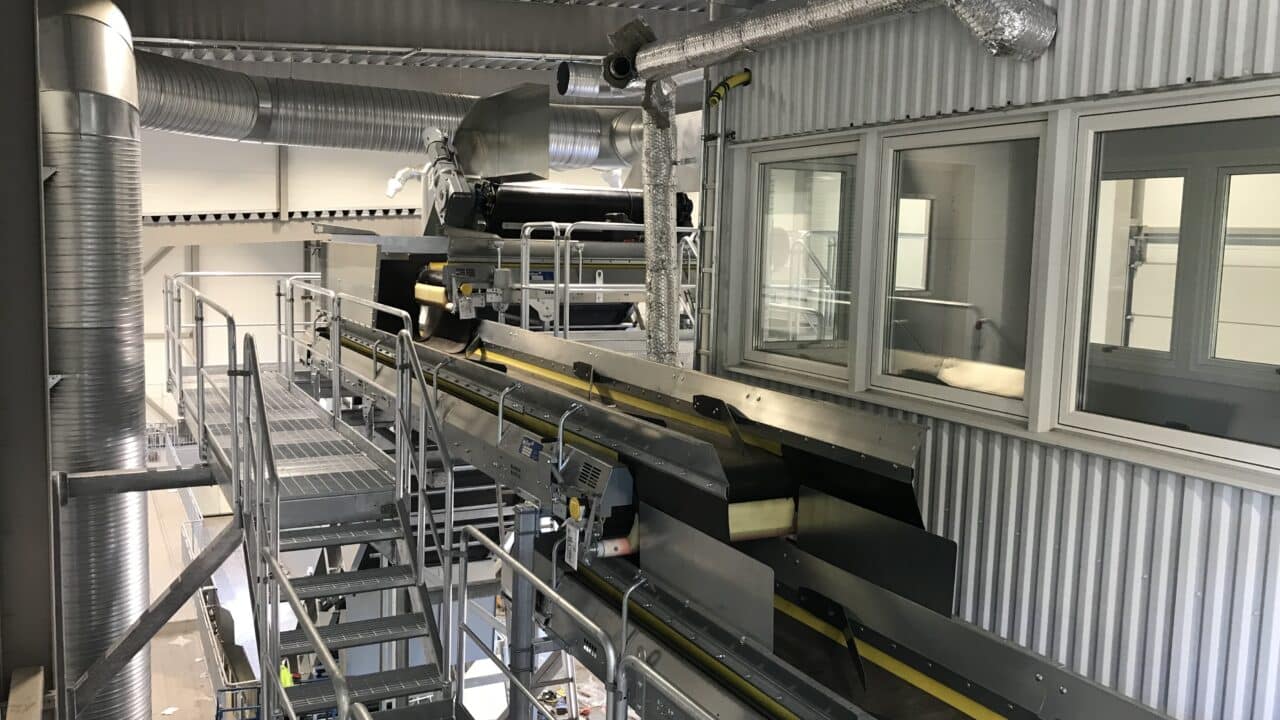
Sorting Ljungby
Ljungby
In Ljungby and Alvesta, more than 27,000 households now sort their waste into colour-coded bags, which are processed at a modern optical sorting facility. Food waste is converted into biogas and biofertiliser, while the other fractions are recycled for a more sustainable society.
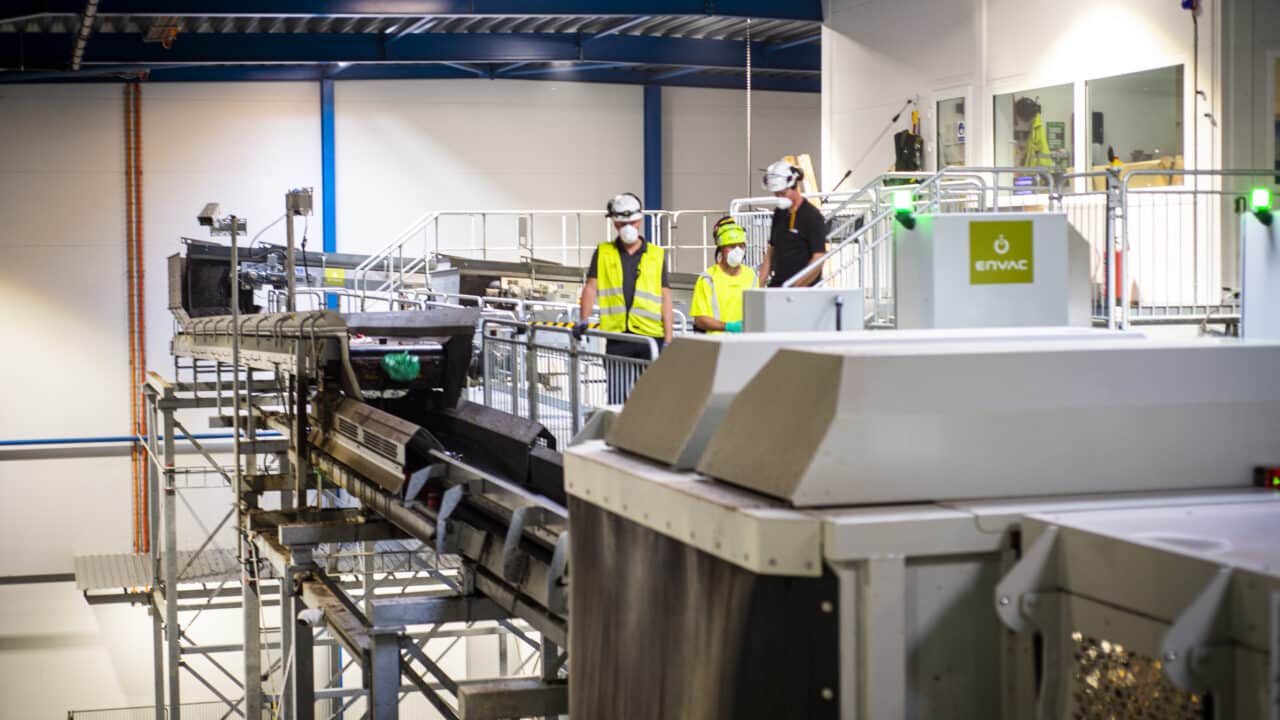
Sorting Aalborg, Denmark
Aalborg
In Aalborg, ~224,000 residents sort their waste into coloured bags, which are processed at Denmark’s first optical sorting facility. The solution makes things easier for households and more cost-effective for the municipality, while also reducing environmental impact.
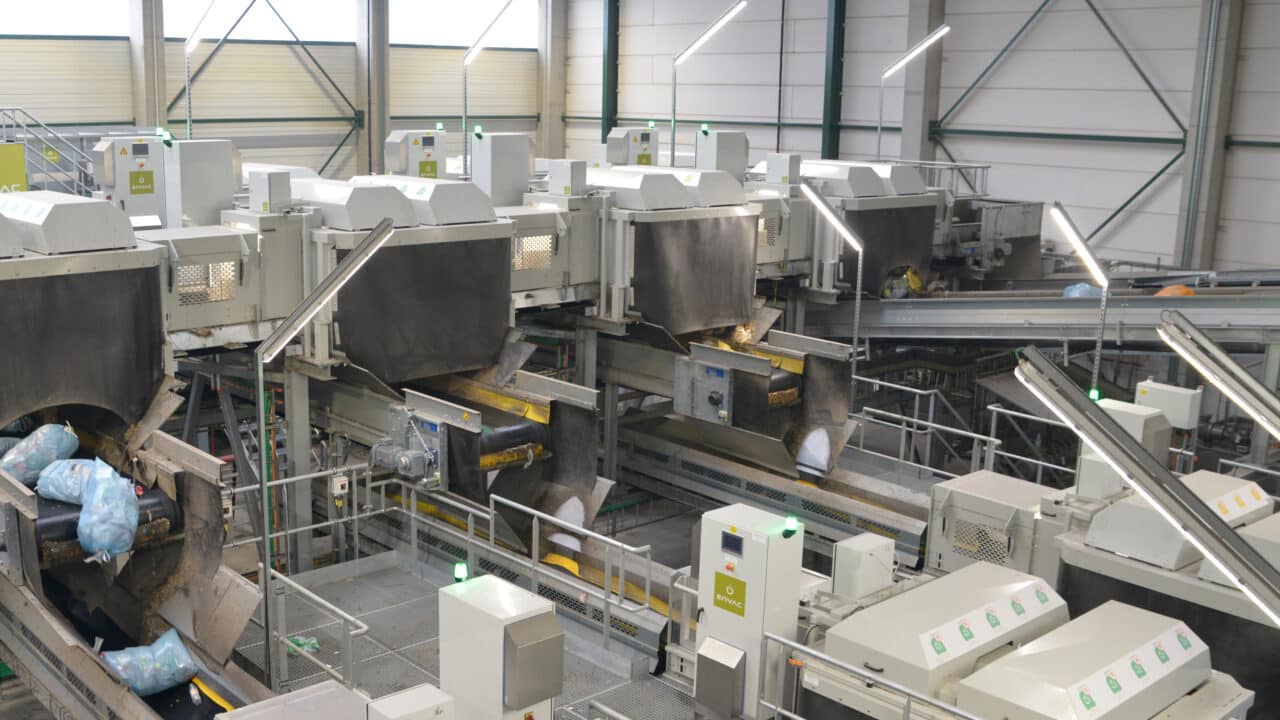
Sorting Biostoom Beringen, Belgium
Limburg Optimo
The Limburg Optimo Sorting Facility was launched in 2022 and services 32 municipalities, enabling smarter sorting for more than 300 000 households. The facility sorts 5 different fractions: food waste, garden waste, textile waste, residual waste and plastic/metal packaging. The facility is built to be flexible and has the option to add 2 more fractions in the future.