Beyond bins: 5 things stadiums need to think about when planning waste
Across Britain (and the rest of the world), stadiums are being reimagined. Some clubs are planning major redevelopments. Others are expanding existing venues. Many are looking at how their grounds can work harder for fans, commercial partners and the communities around them. The conversation often focuses on capacity, hospitality, transport, broadcast requirements, fan zones and public realm. All of these matter. But there is another part of the stadium experience that deserves a place much earlier in the design brief: waste management.
Not because waste is glamorous. Precisely because it is not.
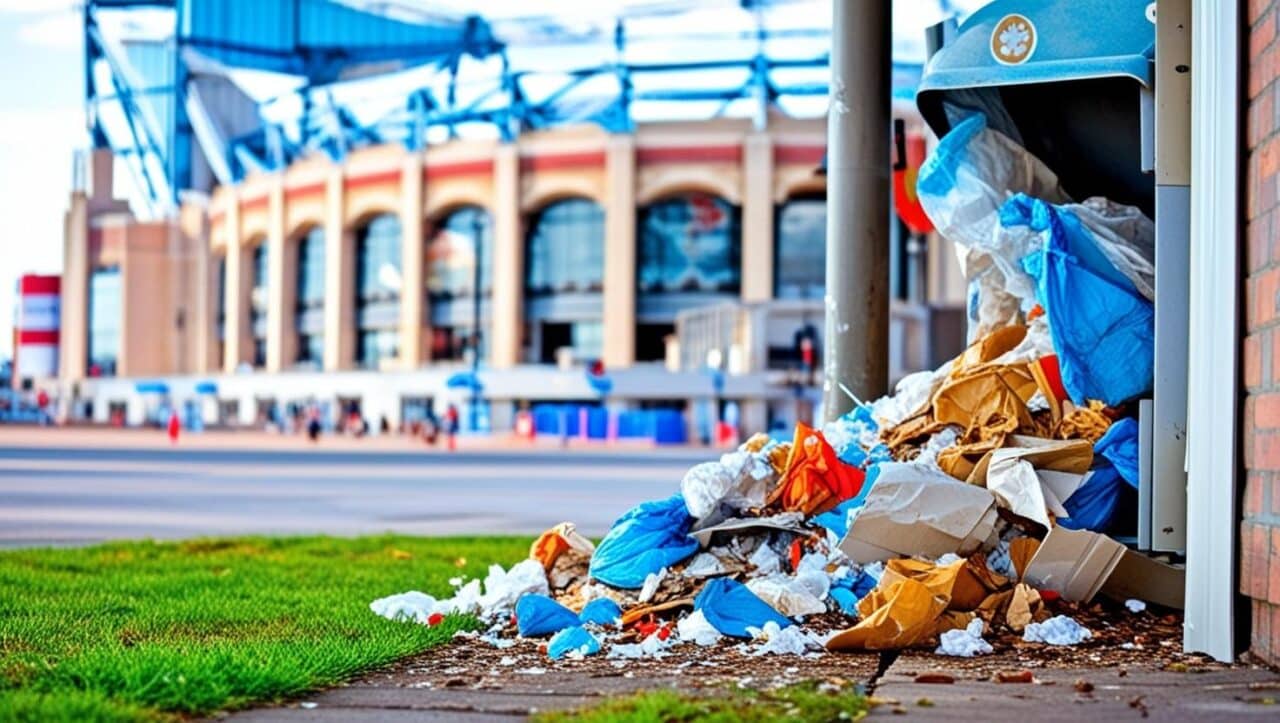
When stadium waste is managed well, most people barely notice it. When it is managed badly, everyone does. Overflowing bins, odours, litter, cluttered concourses and collection vehicles moving through busy areas can all affect how a venue feels and performs. For modern stadiums, the question is no longer simply, “Where do we put the bins?” It is, “How can waste infrastructure support a cleaner, safer, more efficient and more flexible venue?”
1. Matchday waste does not behave like ordinary waste
A stadium does not produce waste gradually throughout the day. It produces sudden peaks. Thousands of people arrive within a short window, buy food and drink, move through concourses, gather in fan areas and leave almost simultaneously. That creates intense pressure on bins, cleaning teams, storage areas, service routes and collection logistics.
Traditional waste systems often respond by adding more bins, more back-of-house storage and more manual handling. But in a modern stadium, space is too valuable for that to be the only answer. Every area used for waste storage is an area that cannot be used for supporters, retail, hospitality, accessibility, security or public realm. Every extra collection movement adds pressure to an already busy event-day environment.
That is why stadium waste needs to be treated as part of the operational and spatial design challenge from the beginning, not as an afterthought once the stands, concourses and commercial areas have already been planned.
2. Waste infrastructure can unlock valuable space
One of the biggest opportunities in stadium design is not simply creating more space. It is using existing space better. Back-of-house areas are under constant pressure. So are concourses, entrances, fan zones, service yards and public areas around the venue. Waste infrastructure has a direct impact on all of them.
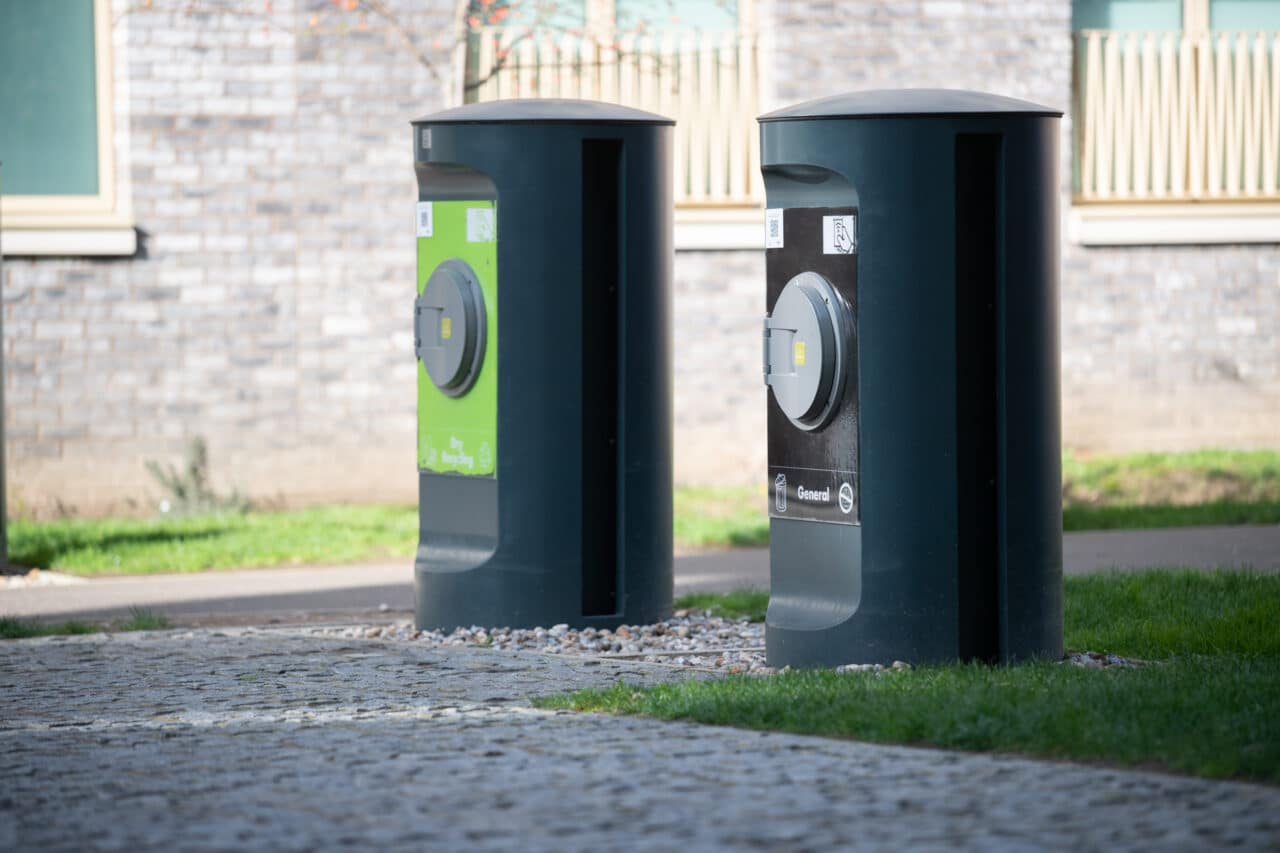
By moving waste through a sealed, automated system to a central collection point, stadiums can reduce the need for large local bin stores and manual movement across the site. This can create more flexibility in how space is planned and used. For a football club, rugby ground, cricket venue or arena, that could mean wider circulation areas, cleaner concourses, better commercial opportunities, improved accessibility or more attractive public spaces around the stadium.
In other words, smarter waste management is not only an operational improvement. It can be a design advantage.
3. A cleaner stadium improves the fan experience
Supporters may not leave a match talking about the waste system. But they will notice when bins are overflowing, concourses feel cluttered or litter builds up around food and drink areas. Cleanliness has a direct impact on how people experience a venue. It shapes comfort, dwell time, perception of quality and the overall sense that the stadium is well managed. This matters across the full fan journey: arriving at the ground, moving through turnstiles, buying refreshments, using concourses at half-time and leaving after the final whistle.
Smart waste infrastructure can help remove waste from busy public areas quickly and discreetly. It can also reduce the reliance on staff moving bags, bins and trolleys through crowded spaces during peak periods. The result is a cleaner, more pleasant environment for fans and a more manageable one for stadium operators.
4. Stadiums need to be better neighbours
British stadiums rarely sit in isolation. They are part of towns, cities and neighbourhoods. On event days, surrounding areas already have to absorb crowd movement, traffic management, public transport pressure, deliveries, policing and security. Waste should not add to that burden.
Overflowing bins, litter, odours and repeated collection vehicle movements can all affect nearby residents and businesses. This is especially important where stadium projects form part of wider regeneration plans, with homes, shops, workplaces, hotels and public spaces surrounding the venue.
Thinking about waste at masterplan stage allows clubs, developers and local authorities to design systems that serve both the stadium and the district around it. That is where the greatest long-term value sits: not only inside the venue, but in the streets, squares and neighbourhoods that surround it.
5. Better recycling needs better infrastructure
Most fans are willing to recycle when the choice is clear, convenient and easy to understand. The challenge is making that possible in a fast-moving stadium environment. If recycling points are full, badly placed or confusing, people will use the nearest available option. If waste then has to be moved manually through congested areas, separation can become harder to maintain.
The answer is not only better signage or more sustainability messaging. Those things help, but they need to be supported by the right infrastructure. Convenient inlets, reliable capacity and well-planned waste streams can make recycling part of the normal matchday experience rather than an extra effort. They can also help operators maintain cleaner areas and improve the way different waste streams are handled behind the scenes.
For venues under growing pressure to improve sustainability performance, this matters.
Future-ready stadiums need flexible systems
The waste profile of a stadium will not stay the same. Packaging formats will change. Food and beverage models will evolve. Reuse schemes may become more common. Recycling expectations will increase. Regulations may tighten. Mixed-use development around venues may add new waste streams over time. That means waste systems need to be planned with flexibility in mind. Automated waste collection and kitchen solutions can be adapted, expanded and integrated with surrounding developments, helping venues respond to future requirements without constantly reworking the basics.
For stadiums designed to last for generations, that flexibility is essential.
The opportunity for British stadiums
The next chapter of stadium development in Britain (and elsewhere in the world) should not be defined only by bigger stands, better hospitality or more premium seats. It should also be defined by venues that are cleaner, more efficient, more sustainable and easier to operate. Waste management may not be the most visible part of that ambition, but it is one of the systems that makes it possible. By considering smart waste infrastructure early, clubs and developers can create stadiums that work better for fans, staff, commercial partners and surrounding communities.
The best waste system is one most people never have to think about. But the value it creates can be seen everywhere: in cleaner concourses, better use of space, smoother operations and stadium districts that feel ready for the future.
Envac’s Stationary Systems provides a fully automated waste collection solution designed for urban environments, residential communities, and commercial areas.
By transporting waste through a sealed underground pipe network, this system eliminates the need for traditional bin collection, reducing noise, emissions, and traffic congestion. It offers a cleaner, more efficient, and sustainable approach to modern waste management.
Handling huge amounts of food waste produced in commercial kitchens or catering facilities poses significant health, safety, and logistical challenges. Restaurants also have to meet increasingly strict environmental standards for sorting waste at the source.
Envac’s kitchen waste system can manage nearly any type of food waste and recyclables, eliminate the risk of cross-contamination, and improve recycling levels.
Reliable waste management systems require expert care to ensure uninterrupted performance and long-term efficiency. Envac’s Operations & Maintenance (O&M) services provide comprehensive solutions for system maintenance, upgrades, and modernisation, helping cities, hospitals, and communities maintain high-performing, future-ready waste collection systems.
Our tailor-made service packages cover everything from routine maintenance to full system upgrades, ensuring your automated waste collection system continues to operate flawlessly year after year.
For stadiums planning a redevelopment, expansion or wider regeneration project, Envac can help assess how smart waste infrastructure could support the venue’s operational, commercial and sustainability goals. Our team can provide tailored advice based on the site layout, expected footfall, waste streams, service access and long-term development plans.
To discuss a customised solution for your stadium or arena, contact Envac and we’ll help identify the right approach for your venue, your visitors and the surrounding community.
When stadium waste is managed well, most people barely notice it. When it is managed badly, everyone does. Overflowing bins, odours, litter, cluttered concourses and collection vehicles moving through busy areas can all affect how a venue feels and performs. For modern stadiums, the question is no longer simply, “Where do we put the bins?” It is, “How can waste infrastructure support a cleaner, safer, more efficient and more flexible venue?”
The Netherlands is often seen as a frontrunner in recycling, yet municipalities still struggle with growing waste volumes, stubborn residual streams, overflowing underground containers and rising costs. This article shows how data‑driven operations, Envac automated waste collection systems (AWCS) and Envac sorting solutions, already proven in Dutch projects such as Almere and Arnhem, can help cities move from day‑to‑day firefighting to more future‑proof, integrated waste infrastructure.
Healthcare providers face immense pressure to deliver high-quality care while maintaining a smooth patient flow, which is crucial for keeping healthcare-associated infections (HAIs) low and preventing nurse burnout. Additionally, there is a constant need to improve infection control, maximise clinical efficiency, and expand capacity—all while adhering to strict budgetary limits. However, an often-overlooked aspect that can undermine these goals is how hospitals manage their soiled flow logistics.