~30,000
tons/year
in designed capacity
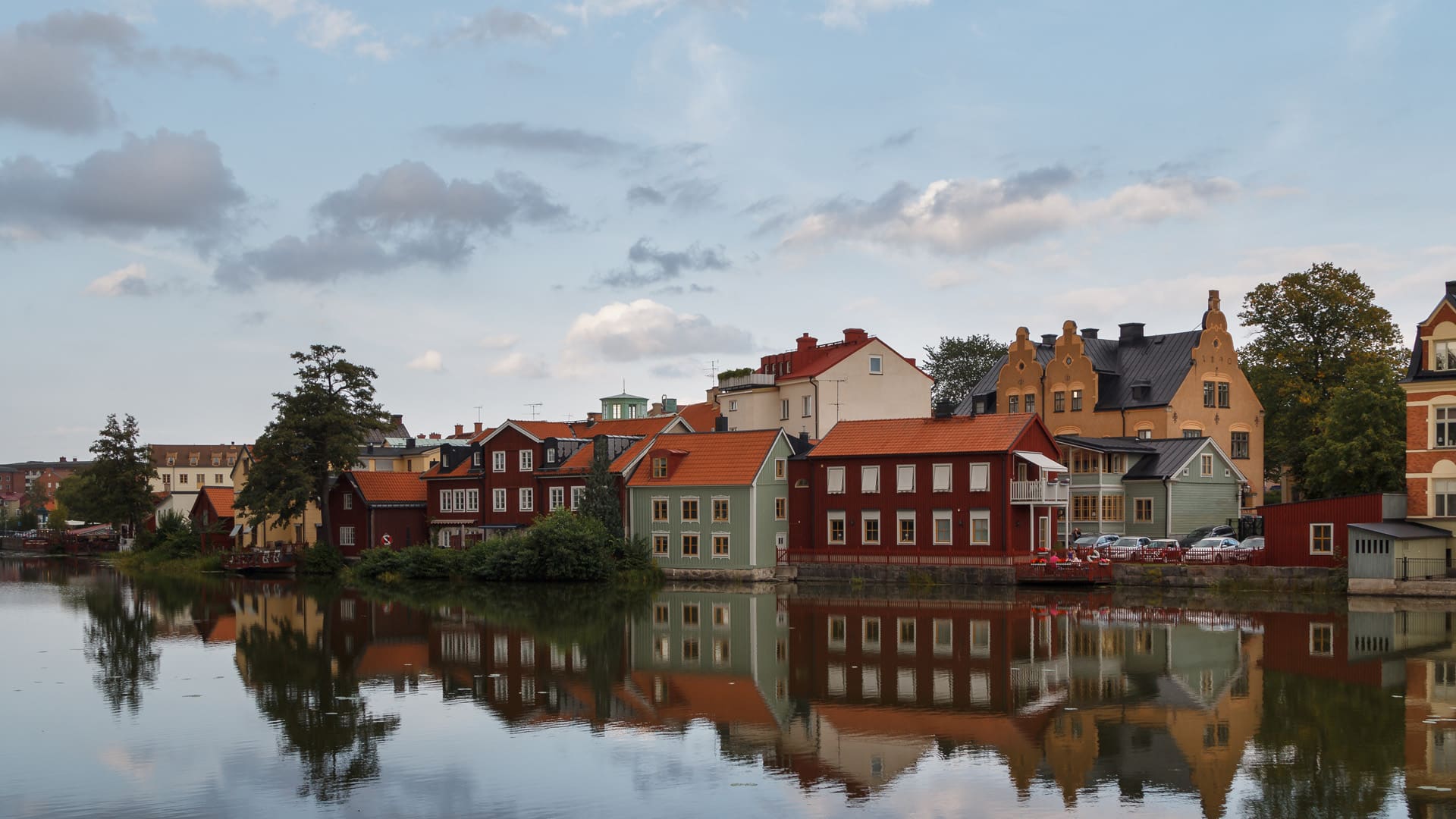
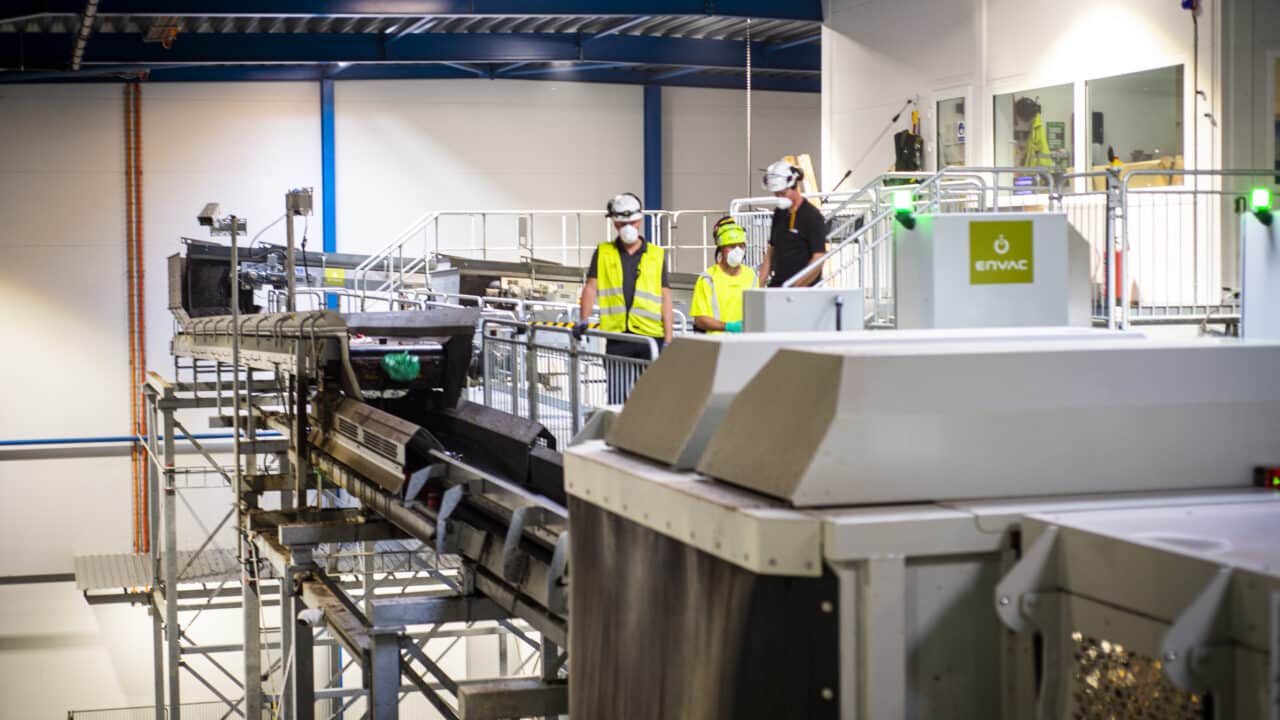
The municipality of Eskilstuna was among the first in Sweden to offer its residents property-based collection, and when the demands of the national goals increased, the municipality transitioned to an optical sorting solution from Envac as early as 2010. Environmental goals of 50% waste sorting were achieved within just a few months.
Eskilstuna municipality’s long-term waste strategy aims for a zero waste vision, with goals, policies, and measures toward a resource-efficient and non-toxic circular society through an adopted municipal waste management ordinance. The long-term waste strategy aligns with the national waste plan, national strategy for the circular economy, and the EU’s green requirements.
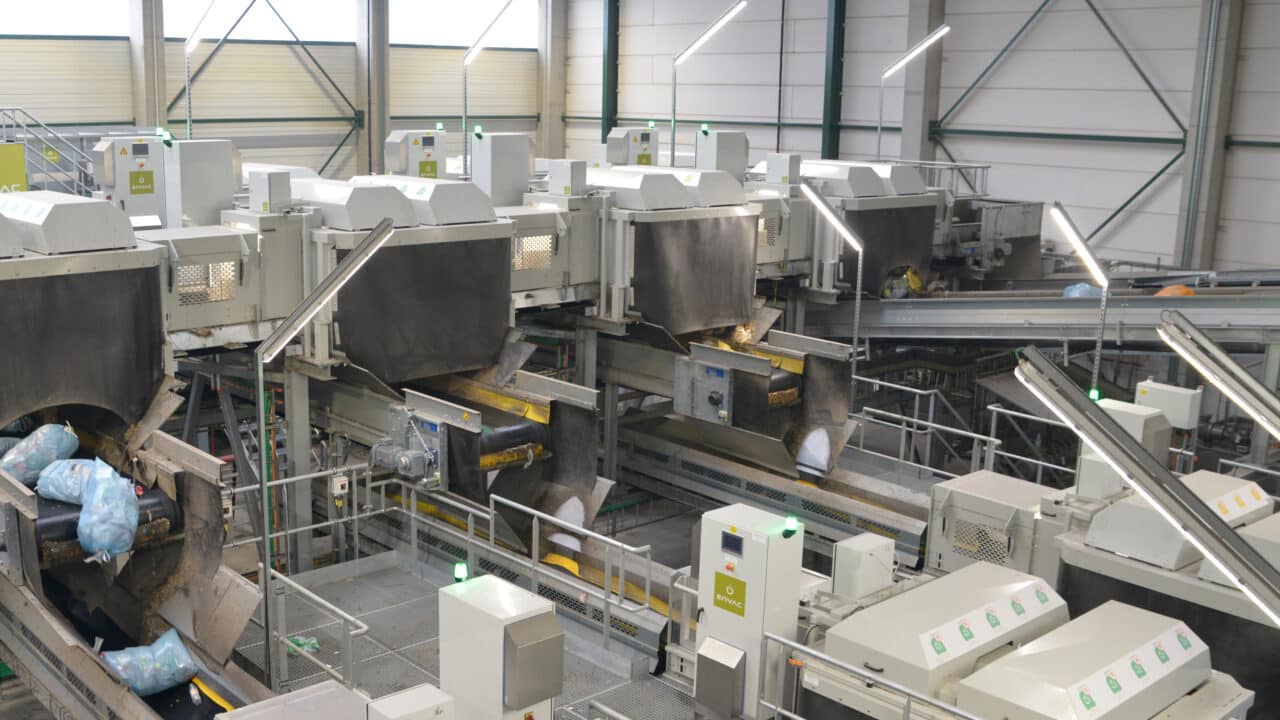
The choice was made for optical sorting so that residents would have a simple and user-friendly system for both food waste and packaging. It’s a flexible system that reduces environmental impact and energy consumption. Color sorting makes it easy for residents to do the right thing by placing the different fractions in bags of different colors but then throwing all the bags into the same container.
The facility, which sorts out six fractions, is owned and operated by ESEM (Eskilstuna Strängnäs Energy and Environment Ltd). Eskilstuna today has several municipalities connected to the system, and they are among the leading municipalities in Sweden in recycling.
Through a new, expanded agreement between Envac and Tuna Entreprenad, the development of the system now continues. The agreement includes the conversion and expansion of the existing optical sorting plant to increase capacity and improve the sorting rate. Demolition work will begin in December 2025, and installation work will take place during the spring and autumn of 2026.
The upgraded plant is expected to be commissioned in Q4 2026. With the increased capacity, even better conditions are created to achieve higher recycling levels and, in the long term, to connect additional municipalities to a proven and future-proof solution for property-close collection and optical sorting.
tons/year
in designed capacity
fractions
Food waste, plastic, paper, newspapers, metal and residual waste
users
connected to the facility
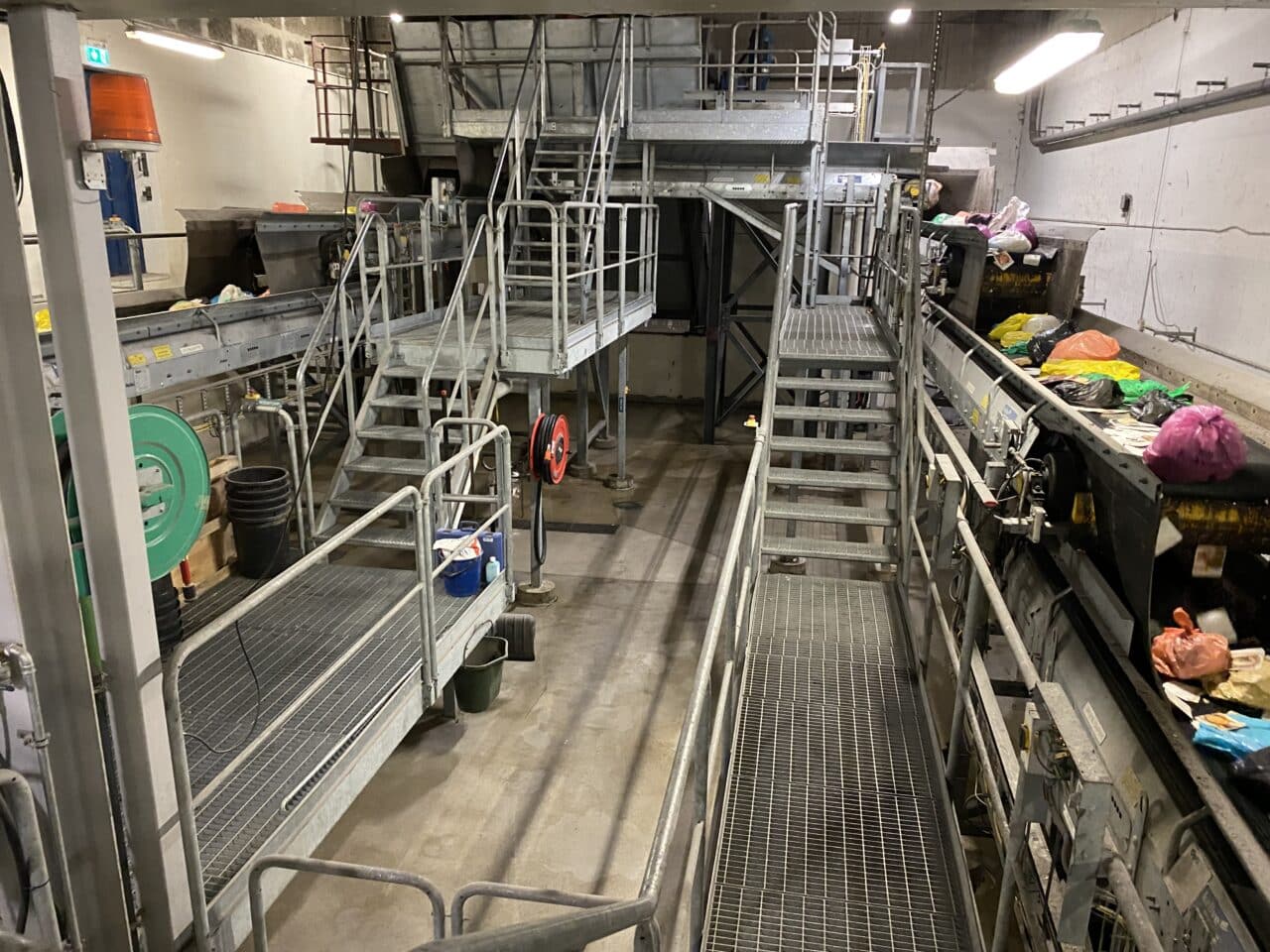
In 2023, Eskilstuna municipality, as one of the few municipalities, was able to lower its waste collection and disposal fees for residents with maintained low fees throughout 2024. The optical sorting facility contributes to this by being a flexible system where it is easy to expand the number of fractions.
In its decision for waste collection fees for 2024, the municipality writes:
“The new packaging ordinance comes into effect on January 1, 2024, and from 2027, mandatory property-based collection (FNI) will be introduced. The municipality was among the first in Sweden to offer its residents FNI for packaging and made early investments in an optical waste facility. Therefore, no need for fee increases is seen this year.”
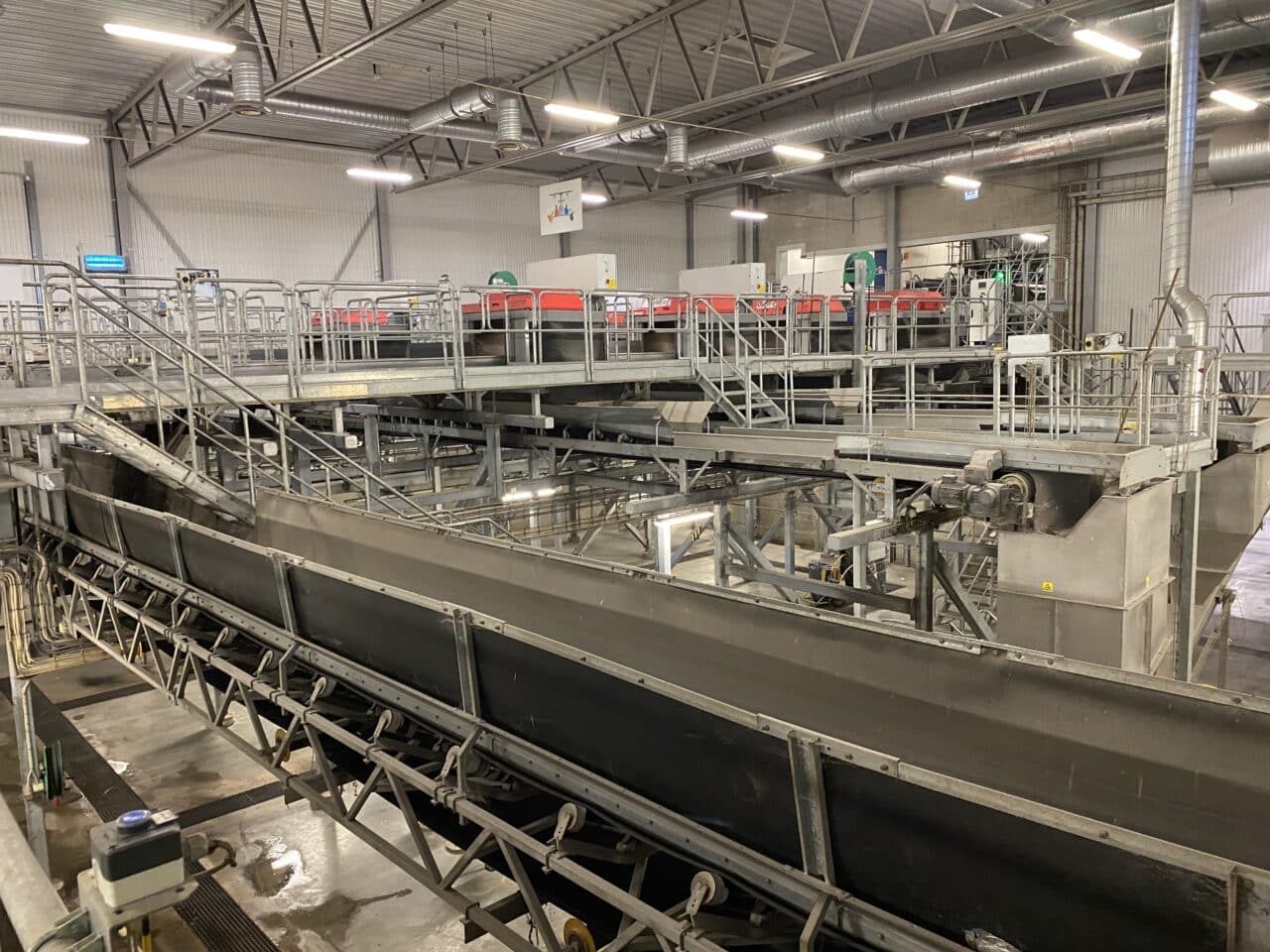
2025–2026 Through a new, expanded agreement, the optical sorting plant is being rebuilt and expanded to increase capacity and sorting efficiency, with commissioning planned for Q4 2026 and the possibility to connect even more municipalities to the system.
2025 ESEM is once again lowering waste fees for single-family homes and holiday home owners. This is made possible thanks to their early implementation of colour sorting, where households sort their packaging, food waste and newspapers directly in their homes.
2024 SRV Återvinning signs an agreement with ESEM to gradually enable the sorting of food waste and packaging from Nynäshamn, Haninge, Salem, Botkyrka and Huddinge at the plant.
2017 Eskilstuna and Strängnäs introduced a seventh colour/fraction and became among the first municipalities in the country to test the sorting of textiles through property-close collection. No extension of the facility was required; instead, the change was made easily in the camera system that controls the waste sorting.
2016 the plant was expanded with an additional receiving pocket to be able to receive waste from Örebro.
2013 ESEM, together with Envac Sorting, developed technologies for the post-treatment of the plastic fraction in order to further refine the material.
With colour sorting, we can easily achieve our set environmental goals.
Kent Briby Managing director Recycling Eskilstuna Strängnäs Energi och Miljö AB
To see all our projects, click here.
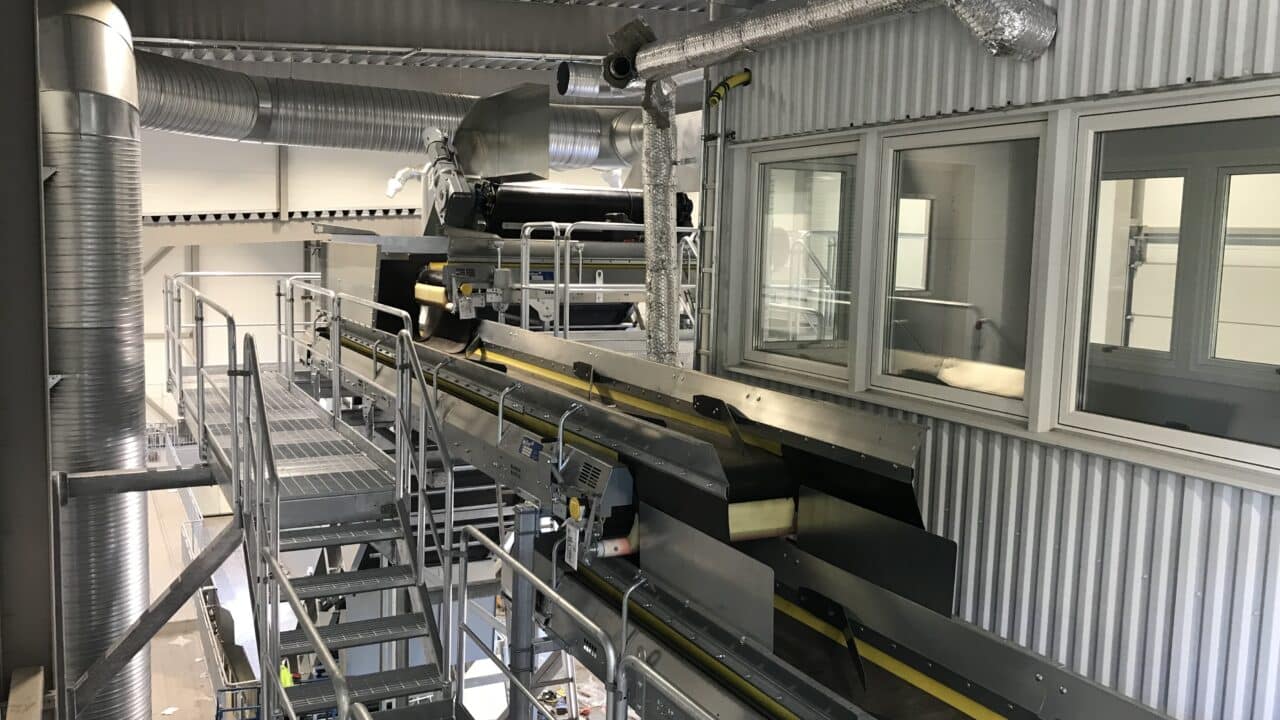
Sorting Ljungby
In Ljungby and Alvesta, more than 27,000 households now sort their waste into colour-coded bags, which are processed at a modern optical sorting facility. Food waste is converted into biogas and biofertiliser, while the other fractions are recycled for a more sustainable society.
Sorting Aalborg, Denmark
In Aalborg, ~224,000 residents sort their waste into coloured bags, which are processed at Denmark’s first optical sorting facility. The solution makes things easier for households and more cost-effective for the municipality, while also reducing environmental impact.
Sorting Biostoom Beringen, Belgium
The Limburg Optimo Sorting Facility was launched in 2022 and services 32 municipalities, enabling smarter sorting for more than 300 000 households. The facility sorts 5 different fractions: food waste, garden waste, textile waste, residual waste and plastic/metal packaging. The facility is built to be flexible and has the option to add 2 more fractions in the future.