- Save space
- improve logistics
- Eliminate contamination risks
- improve kitchen safety

Kitchen Waste Management
Envac’s kitchen waste system helps commercial kitchens manage food waste, reduce health risks, and improve recycling and overall hygiene.
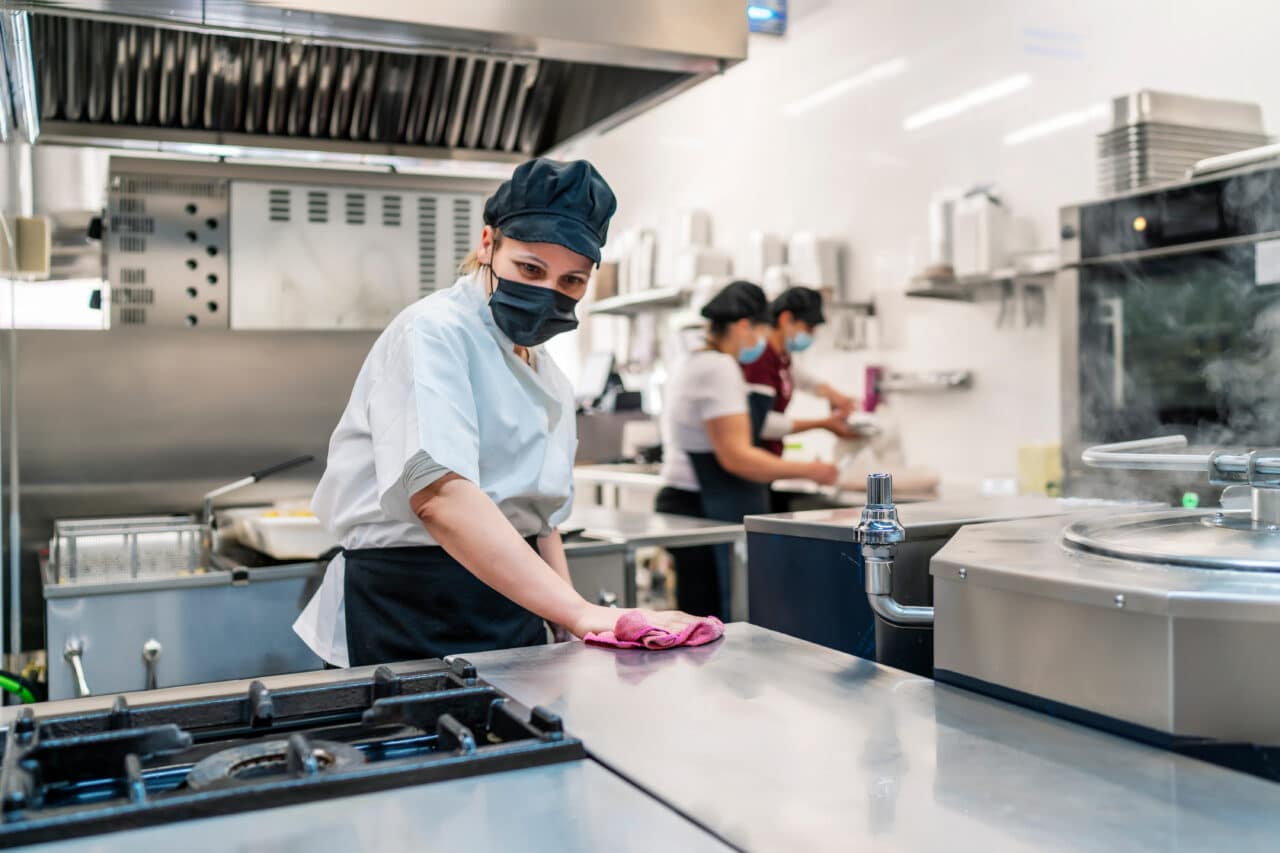
Handling huge amounts of food waste produced in commercial kitchens or catering facilities poses significant health, safety, and logistical challenges. Restaurants also have to meet increasingly strict environmental standards for sorting waste at the source. Envac’s kitchen waste collection system can manage nearly any type of food waste and recyclables, eliminate the risk of cross-contamination, and improve recycling levels.
Envac’s kitchen waste collection system provide quantifiable benefits
- Minimise manual handling
- improved working environment
- odor control
- hygiene
Save space, improve logistics
Integrated inlets throughout the kitchen make the waste disposal easy. The inlets can be positioned within comfortable reach of worktops and help free up valuable space for additional workspaces. The waste storage location is independent of where the inlets are placed—it is usually located outside the building or in the basement for easy access by waste collection vehicles.

Eliminate contamination risks, improve kitchen safety
Envac’s kitchen waste management system complies with the rigorous HACCP hygiene requirements, enabling food facilities to ensure impeccable hygiene and minimise cross-contamination. For example, contamination can also compromise recycling rates if recyclables are mixed with organic material.
Handling waste food is completely separate from handling fresh ingredients. Hermetically sealed steel waste inlets throughout the kitchen’s preparation, dishwashing, and cleaning areas connect to a pneumatic waste pipe network that swiftly transports the waste away. This also means no odours, leaks, bacteria, or pests.

Minimise manual handling, gain operational efficiencies
The kitchen waste collection system eliminates the need for unhygienic and time-consuming manual handling, collection, and transport of food waste. Say goodbye to dragging waste bins through clean areas while the kitchen is operating and, additionally, maintaining waste storage. Instead, the waste is thrown into the conveniently placed inlets and vacuumed through the pipes to a separate refrigerated storage unit. These storage units are then emptied using a sludge or vacuum truck.
This improves the working environment for employees and cleaning staff alike while offering a more efficient way to handle waste when space is tight, and workflows need to be optimised.
Better food waste sorting at the source
Envac’s kitchen waste collection system can help large-scale kitchens and catering facilities improve their recycling rates. It makes it easier to leverage huge amounts of food waste as an environmental resource in biogas production or composting, all while being clean, smart, and efficient.
In addition to airport kitchens, the kitchen waste system can be used by restaurants, professional kitchens, grocery stores, hospitals, shopping malls, and many high-traffic areas.
Example setup of kitchen waste collection system

Better food waste sorting at the source
Envac’s kitchen waste collection system can help large-scale kitchens and catering facilities improve their recycling rates. It makes it easier to leverage huge amounts of food waste as an environmental resource in biogas production or composting, all while being clean, smart, and efficient. In addition to airport kitchens, the kitchen waste system can be used by restaurants, professional kitchens, grocery stores, hospitals, shopping malls, and many high-traffic areas.

Airports
Envac helps airports tackle significant logistical challenges by providing a cost-effective, safe, and secure solution for waste collection. With the Envac kitchen waste collection system, waste management can be efficiently conducted within terminal buildings, airport kitchens, and from incoming flights to in-flight catering. This improves the user experience while minimising manual labour and associated costs, helping airports meet their recycling and sustainability objectives.

Healthcare
Envac’s innovative system minimises the spread of infections, reduces manual handling, and enables a cleaner and safer environment for patients and staff. By utilising separate, sealed pipe networks, materials can be swiftly transported without the need for trolleys or carts. This approach minimises pathogen spread and reduces operational costs, improving cleanliness, safety, and space efficiency. Our commitment to automation and sustainable technology reflects our dedication to creating safer, more hygienic healthcare environments.