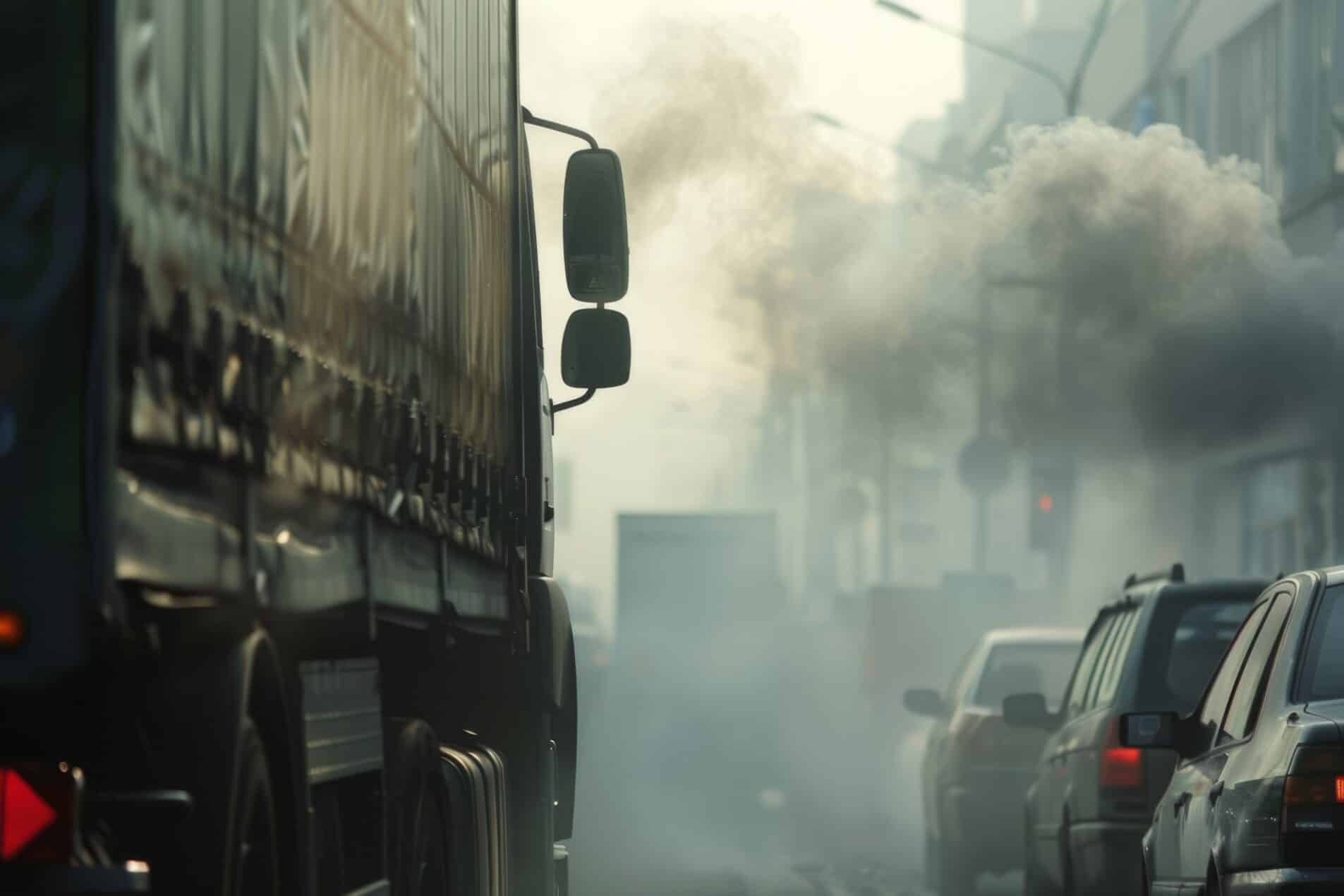
Image: A garbage collection truck on a busy street emitting fumes into the atmosphere
Maintaining clean air is becoming increasingly difficult in urban environments around the globe. The role of waste management practices, particularly those involving traditional garbage collection methods, must be considered among the numerous pollution sources. As cities strive for sustainability and healthier living conditions for their citizens, it’s imperative to address how these practices contribute to the deteriorating quality of our air. The impact of garbage trucks on urban pollution levels is a case in point, highlighting the urgent need for innovative approaches to waste management.
Pollution due to garbage collection trucks
These vehicles significantly contribute to urban air pollution, primarily due to their emission of harmful pollutants. Garbage trucks emit significant nitrogen oxides (NOx) and particulate matter (PM), detrimental to air quality. Nitrogen oxides are notorious for their role in forming smog and acid rain. In contrast, particulate matter can have dire health effects, penetrating deep into the lungs and even entering the bloodstream.
Moreover, the frequent stop-and-go nature of garbage collection trucks exacerbates these emissions, as idling engines and repeated acceleration release more pollutants than steady driving. This operation style also increases fuel consumption, leading to more greenhouse gas emissions contributing to global warming. Additionally, the wear and tear of tyres and brakes during service releases microplastics and heavy metals into the environment, further polluting the air. The noise pollution generated by these trucks is another form of environmental stress that affects the well-being of urban residents. The situation addresses a two-fold problem: health and climate impact.
Addressing the pollution caused by garbage trucks involves transitioning to greener alternatives, such as
- Electric or hybrid vehicles can significantly reduce emissions.
- Optimising routes to minimise stops and idling time.
- Employing innovative waste collection methods like automated waste collection.
By tackling these issues, cities can improve air quality and move towards a more sustainable and healthier environment.
How Envac’s System Works
Envac’s automatic waste collection system fundamentally changes how waste is collected in urban areas. Instead of relying on garbage trucks, the system uses a network of underground pipes. Residents deposit waste into specific inlets for organic, recyclable, and residual use, which also helps in sorting. It is then sucked through underground pipes at high speed to a central collection station, where it is compacted and transported away for recycling or safe disposal.
Reduction of Air Pollutants
The most immediate environmental benefit of switching to an automated waste collection system is the substantially reducing air pollutants. The system significantly reduces carbon monoxide, hydrocarbons, and particulate matter emissions by eliminating the need for garbage trucks to make frequent trips around the city. Moreover, as the waste is contained in a closed system from the point of disposal to the collection station, there is a reduction in the release of methane – a potent greenhouse gas emitted by rotting organic matter into the atmosphere.
Envac’s waste collection system reduces air pollution, is energy efficient, and supports sustainable urban development by promoting a cleaner environment and freeing up space for green areas, improving urban life quality.
Envac’s automatic waste collection system plays a crucial role in the fight against air pollution. It offers a smarter, cleaner, and more efficient method of managing urban waste, providing a blueprint for cities aiming to reduce their environmental footprint. Integrating the system can significantly contribute to global efforts to mitigate air pollution, leading to sustainable urban living. As we move towards a greener future, embracing automatic waste collection will be essential in crafting smarter, healthier cities for future generations.