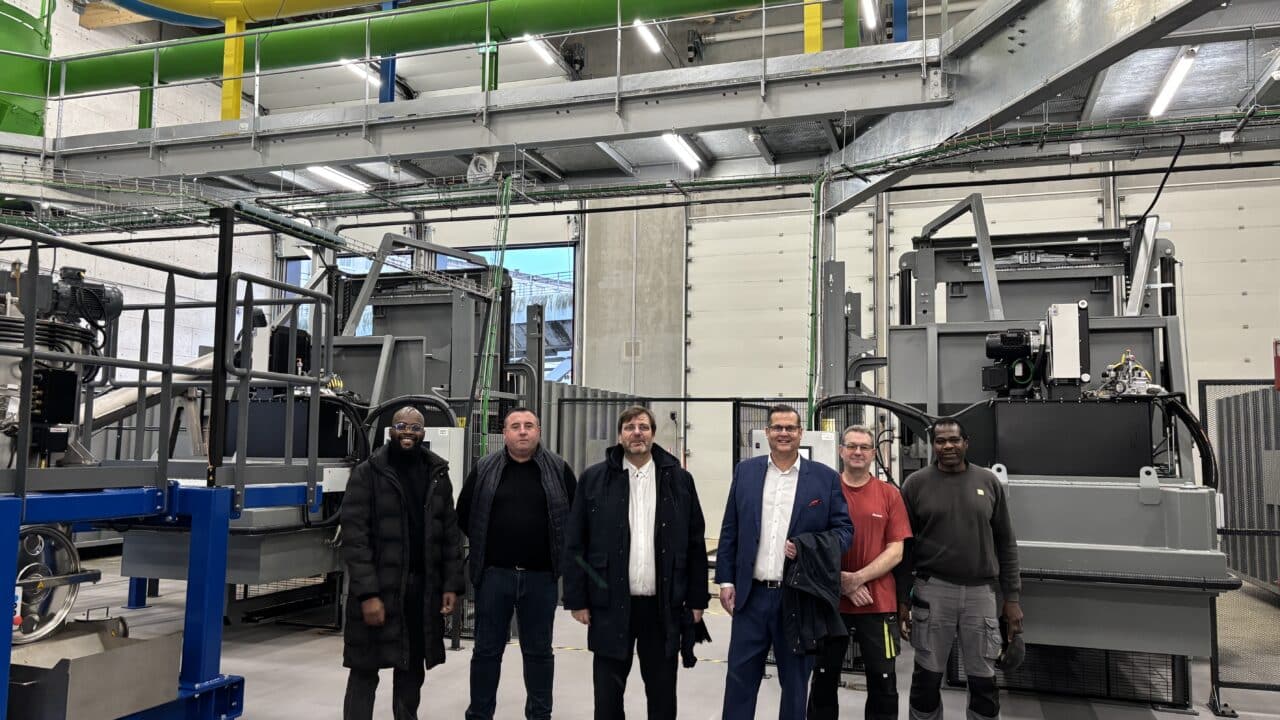
Mumbai, India – Envac is committed to supporting Indian cities, developers and institutions in meeting the ambitious targets set under the Solid Waste Management (SWM) Rules, 2026, coming into force on 1 April 2026.
With a strong presence in India for over 16 years, Envac has been working with progressive urban local bodies, large townships, hospitals, airports and mixed-use developments to build future-proof, technology-driven waste infrastructure. The new SWM Rules 2026, introducing mandatory four-stream segregation at source, stronger accountability for Bulk Waste Generators, the Polluter Pays principle, digital tracking and limited landfilling, are closely aligned with the solutions Envac has been delivering in India and worldwide.
Envac’s global expertise, tailored for India
For more than 60 years, Envac has pioneered automated vacuum waste collection across leading cities, smart districts, hospitals and transport hubs around the world. These closed-loop, underground systems move segregated waste through sealed pipelines to a central collection station, dramatically reducing manual handling, street-level bins and truck movements.
In the context of SWM Rules 2026, Envac’s systems directly support:
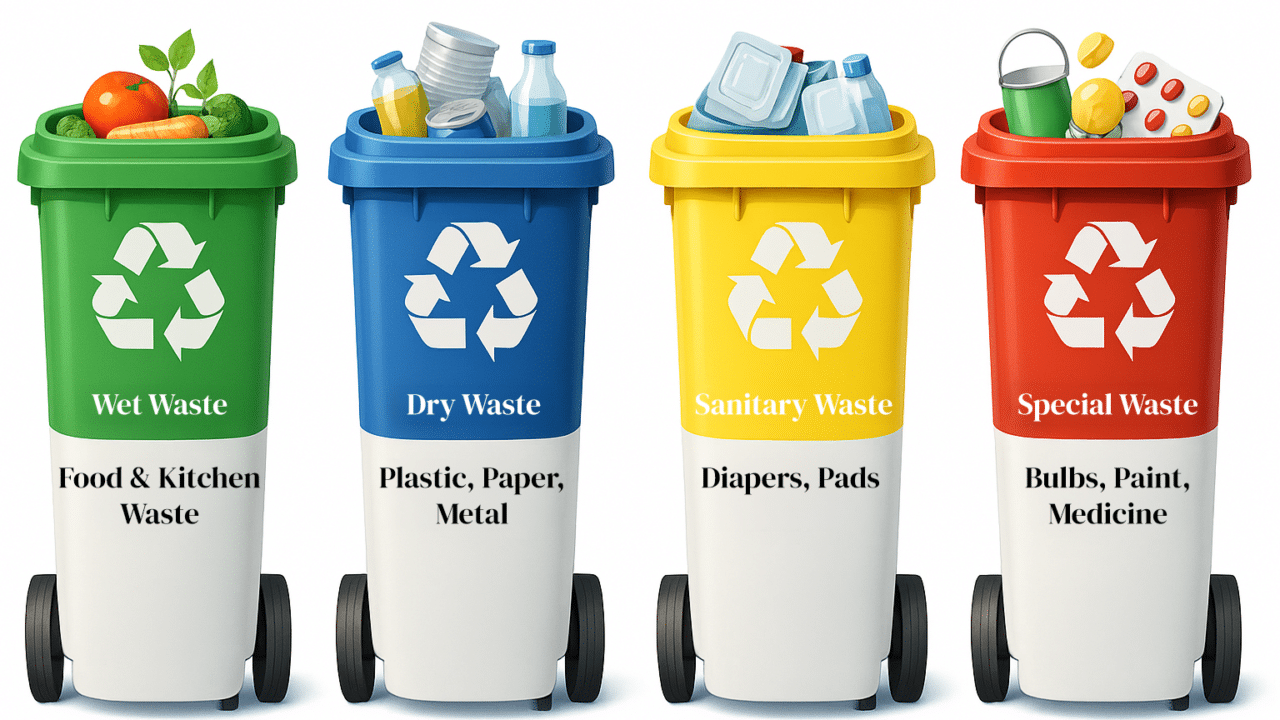
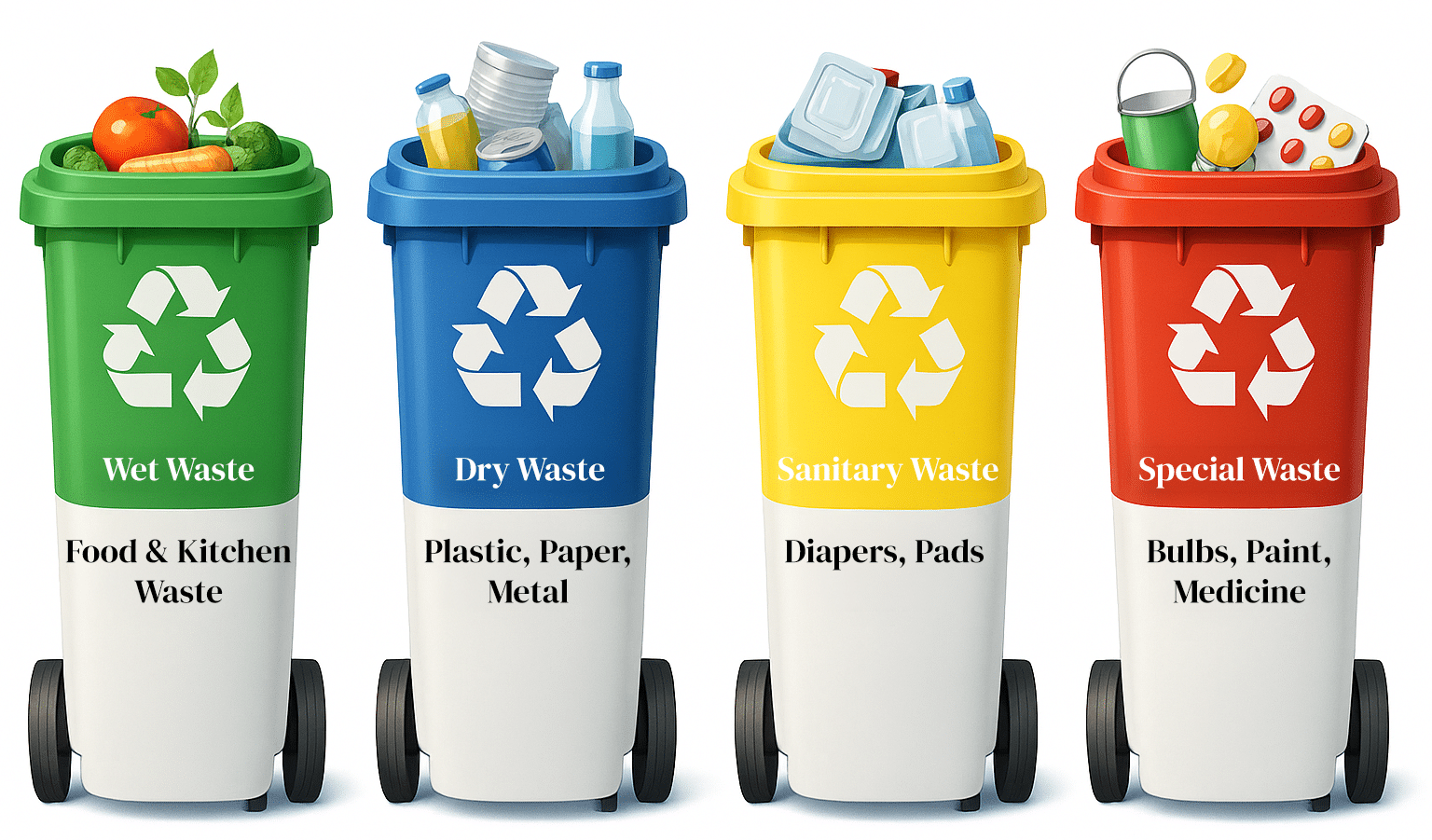
Four-stream segregation at source
By providing dedicated inlets for different waste streams (such as wet, dry, sanitary, and special waste), Envac’s systems help maintain segregation from the point of disposal to the collection terminal, improving the quality of recyclables and organic fractions that feed composting, biogasification, and recycling facilities.
Accountability for Bulk Waste Generators
Large townships, commercial complexes, IT parks, airports, institutions, and industrial campuses, now clearly defined as Bulk Waste Generators, face new obligations to segregate, process, and report their waste responsibly. Envac’s automated systems are designed for precisely these complex, high-density environments, ensuring continuous, hygienic collection with minimal disruption to residents and users.
Polluter Pays and lifecycle optimisation
By significantly reducing dependency on landfills, cutting truck kilometres, lowering operational emissions and enabling better resource recovery, Envac helps asset owners and city authorities reduce long-term environmental and financial costs associated with traditional “collect and dump” models.
Digital tracking and performance visibility
Envac systems are built around advanced control and monitoring platforms that track waste volumes, collection frequency and system performance in real time. This data can be
integrated with municipal dashboards and national reporting systems, supporting future compliance requirements under the centralised SWM portal and Extended Bulk Waste Generator Responsibility (EBWGR) framework.
Supporting India’s transition from landfills to circular, climate-resilient cities
India generates large volumes of municipal solid waste every day, much of which ends up in overflowing landfills or legacy dumpsites. The SWM Rules 2026 explicitly seek to reverse this trend by prioritising segregation, on-site or near-site processing, recovery of materials and energy, and by limiting landfilling to only inert and non-recoverable waste.
Automated vacuum systems are designed to fit this hierarchy:
- Envac’s innovative solutions improve segregation quality and reduce contamination, unlocking higher recycling and resource recovery rates.
- The compact, often underground infrastructure improves urban space utilisation and contributes to improved liveability in dense neighbourhoods.
- Additionally, the systems assist city authorities and developers in planning long-term, integrated waste solutions that remain compliant and efficient over decades, moving beyond reliance on short-term fixes.
As India prepares to implement the new SWM Rules 2026 from 1 April, we have a critical opportunity to change how our cities deal with waste. For too long, improper handling, open dumping and mixed waste have harmed our environment, strained public health systems and put immense pressure on already stressed urban infrastructure.
Automated waste collection solutions like Envac can play a key role in making these rules a reality on the ground. By enabling closed, underground and fully automated waste collection, we help reduce street-level litter, odour, vermin and vehicle movements, while improving segregation at source and ensuring cleaner, safer neighbourhoods.
At Envac India, we see SWM 2026 not just as a compliance mandate, but as a chance to build future-ready, climate-resilient cities where technology, policy and citizen behaviour work together to keep our environments clean and our communities healthy