15%
Of the total amount of produced healthcare waste is hazardous and can be infectious, toxic or radioactive
Bærekraft Helse- og Omsorgsbygg
Effective management of soiled linen in healthcare is essential for infection control. Traditional manual handling poses significant health risks due to exposure to infectious agents, highlighting the need for advanced automated solutions.
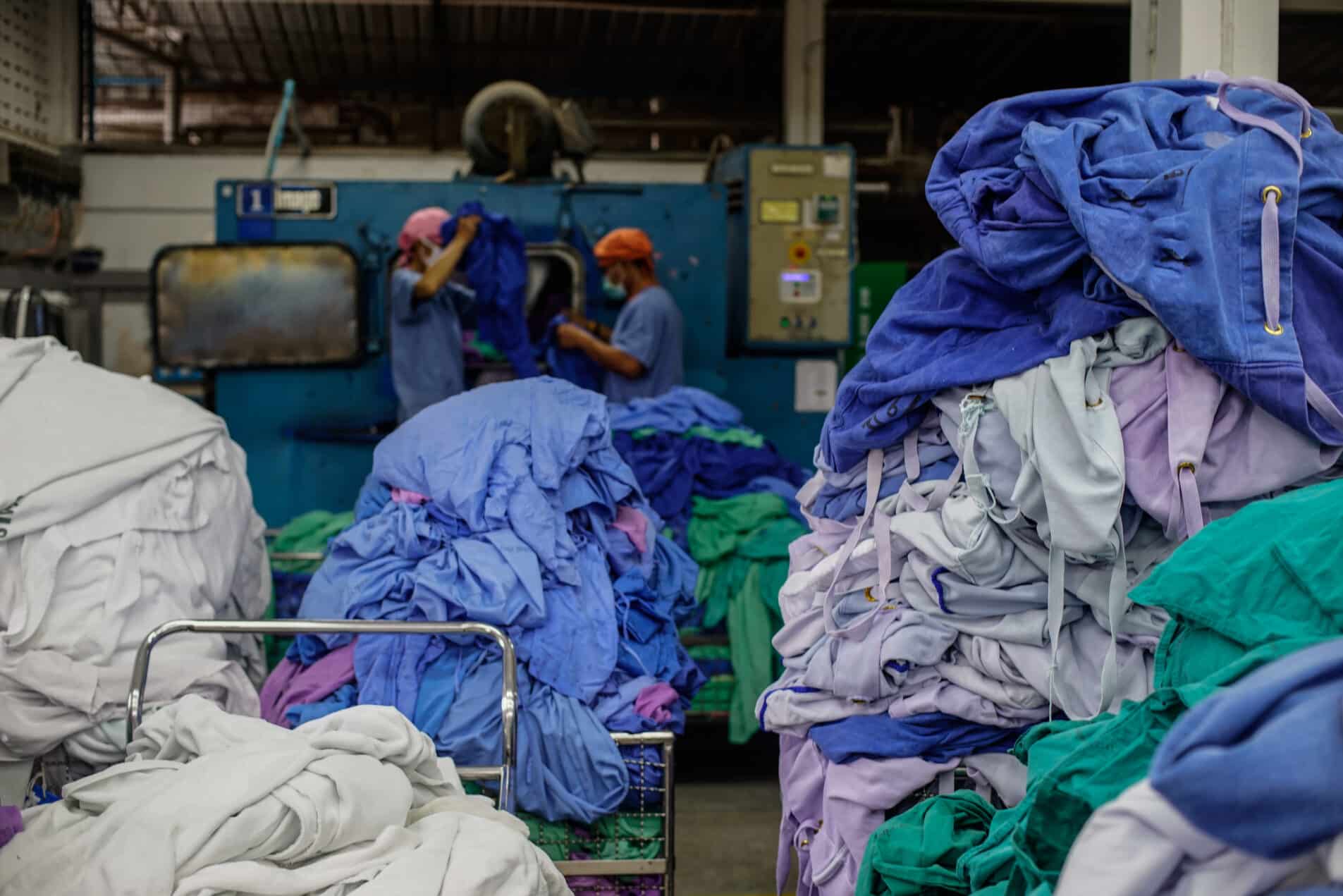
The careful management of soiled linen within healthcare environments is crucial in the broader spectrum of infection prevention and control measures. Historically, the conventional approach toward handling soiled linen through manual processes has presented considerable health risks. These include potential exposures to infectious agents, which underscore the urgent necessity for evolving toward more sophisticated and automated solutions in handling these materials.
Of the total amount of produced healthcare waste is hazardous and can be infectious, toxic or radioactive
Medical personnel are exposed to pathogens as a result of their daily work routines, globally
People worldwide die each year, including 4 million children, due to illnesses caused by unmanaged medical waste
Bacterial loads of fabric on textiles that are heavily contaminated with potentially infective body substances
The U.S. Centers for Disease Control and Prevention (CDC), recognising the inherent risks and the imperative for improved safety, has laid comprehensive guidelines to improve best practices in managing and processing linen and laundry within healthcare settings. These guidelines are meticulously designed to elevate safety protocols, significantly mitigating the risk of infection transmission among patients and healthcare workers. The move towards leveraging advanced systems in handling soiled linen is not merely a strategic shift but a critical step towards fostering safer healthcare environments. This transition is fundamental in ensuring adherence to stringent infection control practices, ultimately safeguarding patient and staff welfare in healthcare facilities.
The conversation surrounding waste management, particularly in healthcare, is multifaceted and challenging. However, by recognising the inherent risks associated with manual waste handling and embracing strategic, technology-driven solutions for soiled linen management, it’s possible to mitigate these hazards comprehensively. As industries and healthcare facilities adapt to these advanced methodologies, the vision for a safer, more sustainable future in waste management becomes increasingly attainable.
| TOTAL NUMBERS OF BEDS | DAILY SOILED LINEN (TONNES) | REDUCED MANUAL HANDLING BY | |
|---|---|---|---|
| Beijing Chaoyang Hospital (East), China | 500 | 2,5 | 65% |
| Hospital General Universitario Santa Lucía, Cartagena, Spain | 1000 | 3 | 64% |
| Kunshan Eastern Medical Center, China | 2000 | 2,2 | 50% |
| Hospital de la Santa Creu i Sant Pau, Barcelona, Spain | 700 | 2,7 | 64% |
| Sirio Libanes Hospital, Brazil | 150 | 0,5 | 34% |
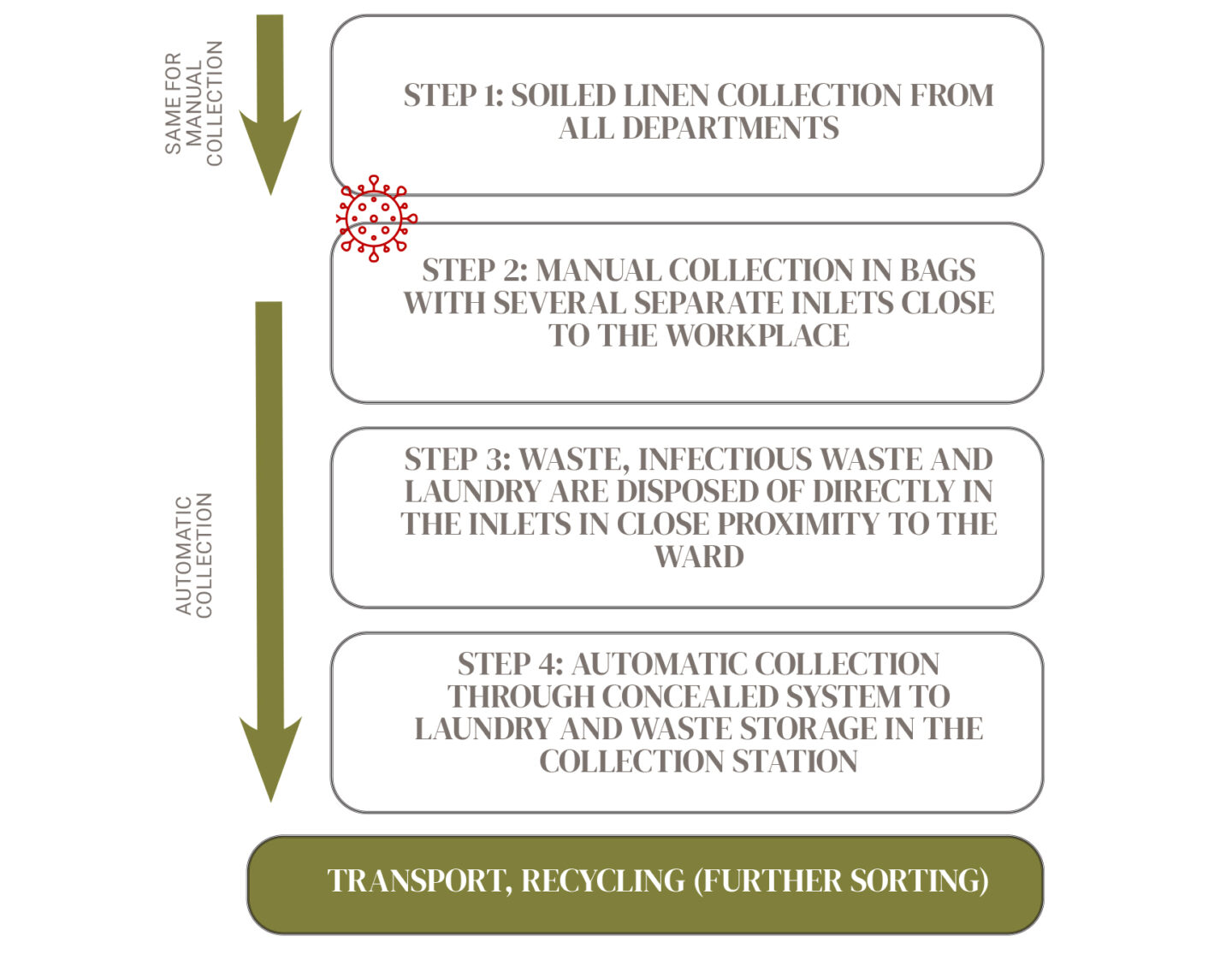
Implementing an Automated Waste Collection System (AWCS) presents a comprehensive solution to the hazards and inefficiencies identified in manual waste handling. By leveraging technology, AWCS can significantly mitigate health risks, reduce the potential for injuries, and promote environmental sustainability.
Implementing an Automated Waste Collection System can revolutionally tackle the challenges posed by manual waste handling holistically. It offers a safer, more efficient, and environmentally friendly alternative, aligning with contemporary needs for sustainable waste management practices. Transitioning to AWCS benefits those directly involved in waste collection and handling and contributes to the broader goal of preserving our environment for future generations.
Sources:
U.S. CENTRES FOR DISEASE PREVENTION AND CONTROL CDC
Healthcare Waste—A Serious Problem for Global Health – PMC (nih.gov)
Healthcare Waste—A Serious Problem for Global Health – PMC (nih.gov)
World Health Organization (WHO). (Year). “Health Risks of Health-Care Waste.
National Institute for Occupational Safety and Health (NIOSH). “Waste Management and Worker Safety.”

How Envac work can help
mitigate risks and improve overall safety
Modernisering og oppgradering Smarte byer Sortering
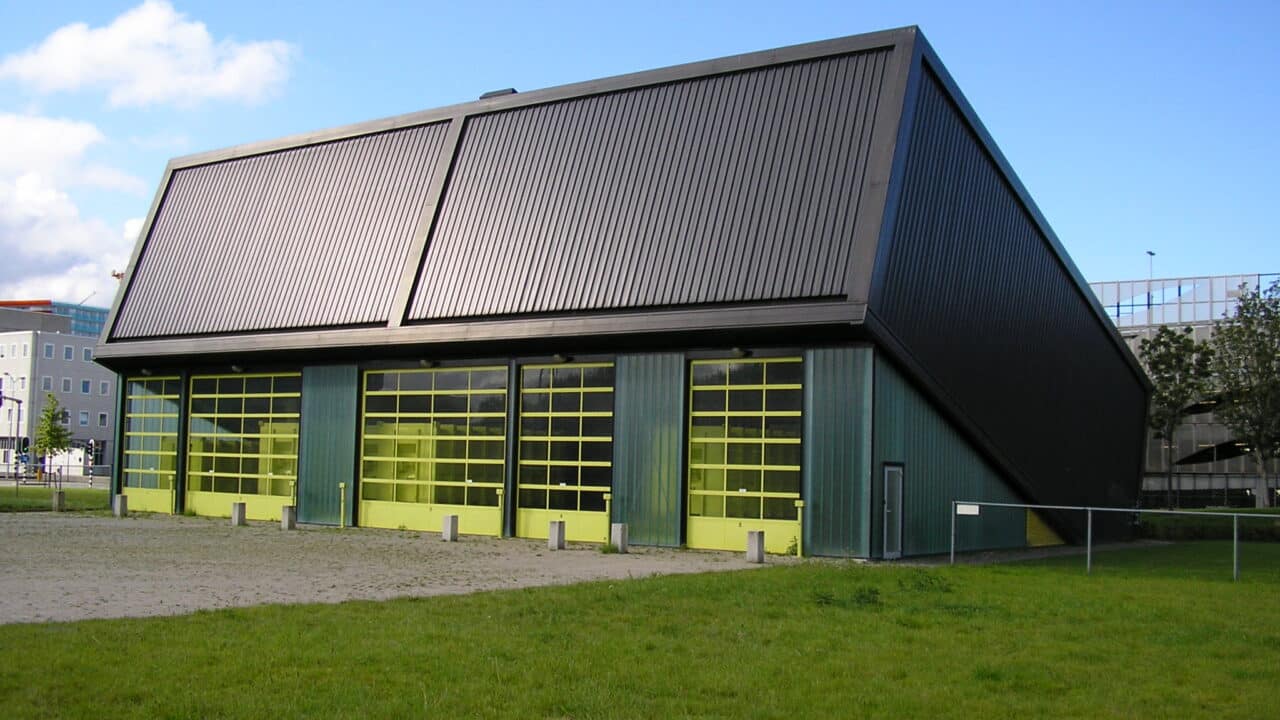
Nederland blir ofte sett på som en foregangsnasjon innen materialgjenvinning, men likevel sliter kommunene med økende avfallsmengder, krevende restfraksjoner, overfylte nedgravde containere og økende kostnader. Denne artikkelen viser hvordan datadrevet drift, Envacs automatiske avfallssug (AWCS) og Envacs sorteringsløsninger – allerede utprøvd i nederlandske prosjekter som Almere og Arnhem – kan hjelpe byer med å gå fra daglig brannslukking til en mer fremtidsrettet, integrert avfallsinfrastruktur.

Helseaktører står under hardt press for å levere helsetjenester av høy kvalitet samtidig som de opprettholder et smidig pasientflyt, noe som er avgjørende for å holde helsetjenesteassosierte infeksjoner (HAI) nede og forebygge utbrenthet blant sykepleiere. Samtidig er det et konstant behov for å forbedre infeksjonskontrollen, maksimere den kliniske effektiviteten og øke kapasiteten – alt innenfor stramme budsjettgrenser. En ofte oversett faktor som kan undergrave disse målene er hvordan sykehus håndterer logistikken rundt sitt urene flyt.
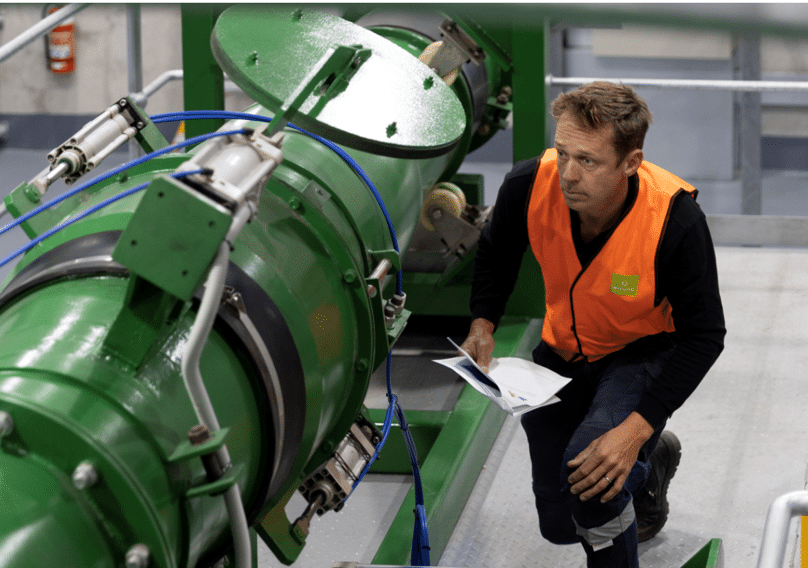
Når et automatisert avfallsinnsamlingssystem først er på plass, er det lett å se det som «ferdig». Rørene ligger i bakken, terminalen er i drift og hverdagen går sin gang. Men utviklingen de siste årene viser at et Envac‑system ikke bare er en teknisk installasjon – det er en langsiktig infrastruktur som kan oppgraderes, optimaliseres og utvides i takt med at byen, regelverket og beboernes forventninger endrer seg.