
Pressemelding

Envac reaches 7.4 million daily users as cities turn to circular, resilient waste systems 

Envac’s Sustainability Report 2025 shows how automated underground waste collection is helping cities respond to rising waste volumes, climate risk and pressure on urban infrastructure. Global municipal solid waste already exceeds 2 billion tonnes a year and is projected to reach about 3.8 billion tonnes by 2050, according to UNEP/ISWA’s Global Waste Management Outlook, putting waste systems at the centre of the global ESG agenda. Against this backdrop, Envac’s Double Materiality Assessment identifies where the system contributes most to resilience and circularity, and where energy use and emissions still need to come down. The group is setting ESG‑aligned KPIs that guide development, operations and reporting in line with emerging EU and global frameworks.

Resilience: critical infrastructure in real‑world conditions (E & S)

Envac’s system moves waste through closed underground pipe networks, reducing truck traffic, emissions, manual handling risks and the effects of extreme weather or disruption – turning waste management into infrastructure that stays operational when cities are under stress.

  • On Roosevelt Island, New York, a system installed in 1975 continues to handle around 2,555 tonnes of waste per year for roughly 14,000 residents and has remained operational during major snowstorms and Hurricane Sandy, demonstrating long‑term reliability over five decades.
  • At Venice Marco Polo Airport, underground pipes and a central collection station have removed internal waste transport vehicles and cut CO₂ emissions by around six tonnes per year, supporting the airport’s 2030 net‑zero ambition while improving hygiene and logistics in one of Europe’s busiest hubs.
  • In Bergen’s historic centre, Envac’s network has been highlighted by the World Economic Forum and The Washington Post as climate‑smart infrastructure that delivers cleaner streets, fewer trucks and more liveable, heritage‑sensitive neighbourhoods, showing how modern systems can protect cultural sites.

Hvis vi vil at byer skal blomstre, må vi våge å tenke nytt. Å skalere opp utprøvde løsninger og oppgradere tette byområder i etterkant er ikke lenger valgfritt – det haster. Og i kjernen av denne omstillingen ligger én sannhet vi ikke kan ignorere: avfallshåndtering er kritisk infrastruktur. Når vi behandler den som sådan, låser vi opp renere, smartere og mer robuste byer for generasjoner som kommer.

Naznoush Habashian Envac Group, Chief Sustainability Officer
Circularity and digital behaviour change (E)

Envac’s systems are designed to turn waste into value, shifting flows from landfills and incineration to circular use.

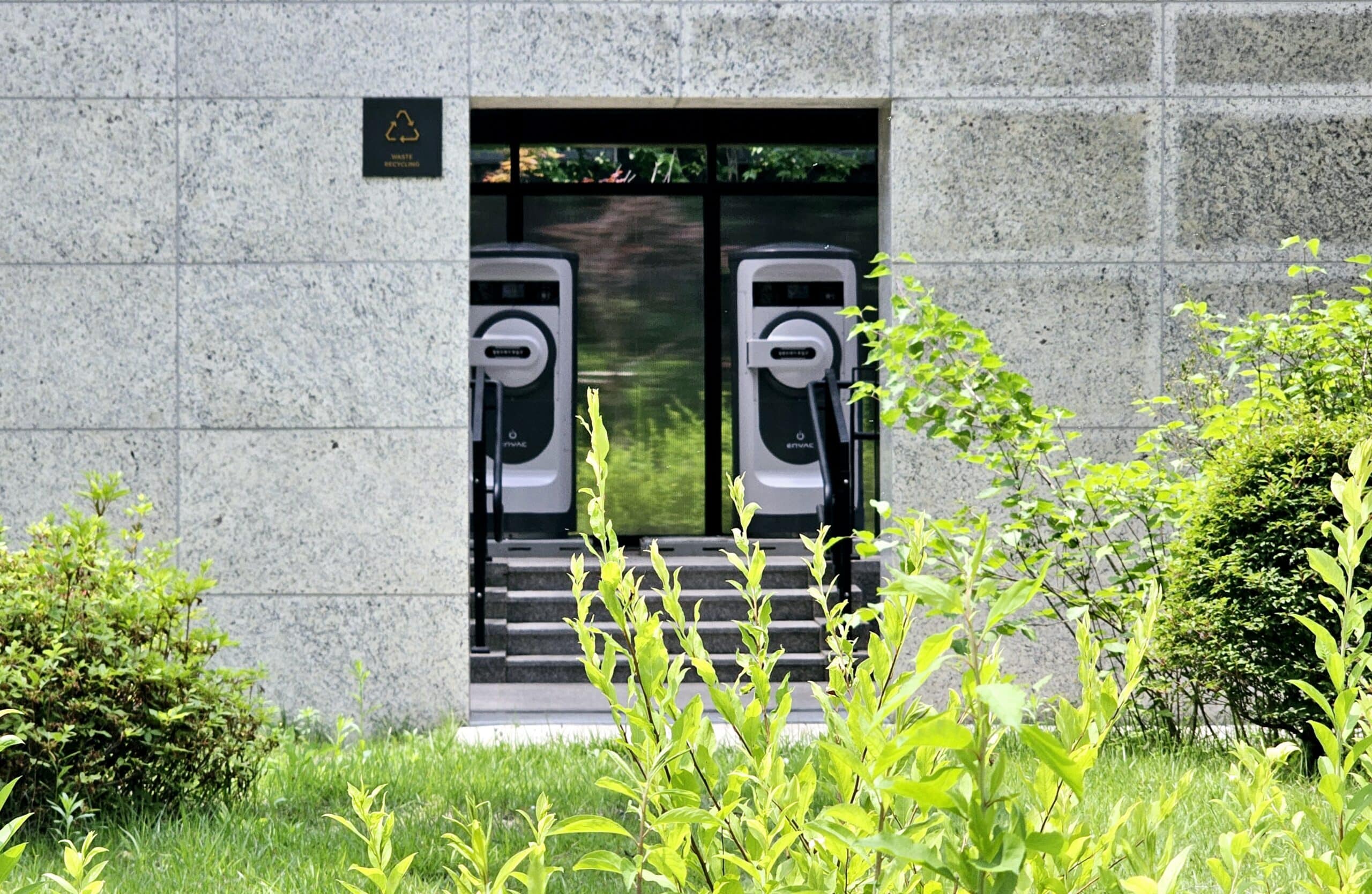
  • Multi‑fraction, source‑separation systems and colour‑coded bags support high‑quality separation of food waste, paper, plastics, glass and metals, which is a precondition for effective recycling.
  • Food waste streams can be transformed into biogas or bio‑fertiliser, while combustible waste supports district heating and power, connecting everyday habits to local energy systems.
  • Integrated solutions link municipal waste to outputs such as electricity, compost, heat, cooking gas and agricultural inputs, helping cities close local material loops.

Digital tools amplify this impact. The Envac ReFlow app uses real‑time data to guide residents in sorting waste, reduce residual waste and support higher recycling rates, making behaviour change measurable.

ESG‑aligned key figures from Sustainability Report 2025

Environment (E) – climate, energy and circularity

  • Daily users: 7.4 million (2024: 7.0 million; 2023: 6.6 million), reflecting growing use of automated systems instead of truck‑based collection.
  • Global footprint: >1,300 systems in 40 countries, showing broad adoption across dense urban districts, hospitals and airports.
  • Collection‑vehicle emissions: up to 90% lower in dense urban reference projects compared with traditional multi‑stop truck collection, demonstrating the climate benefit of moving waste underground.
  • Facility energy use: up to 70% lower in selected installations versus conventional solutions, indicating significant efficiency gains at the terminal level.
  • Envac Automation Platform (EAP4): up to 70% lower power consumption at benchmarked sites through peak‑shaving and demand‑based operation, while maintaining service levels.
  • Energy efficiency KPI: 174 kWh per tonne in new or upgraded EAP4 installations, with a target of below 50 kWh per tonne by 2030, signalling a clear decarbonisation trajectory.
  • Renewable energy KPI: 3% of installations running on renewable energy today, with a 25% target by 2030 to reduce dependence on fossil‑based grids.
  • Resource circularity KPI (ReFlow): 17,000 ReFlow‑connected apartments in 2025 and a target of more than 100,000 by 2027, making digital behaviour change a core driver of circular outcomes.

Social (S) – safety and quality of life

  • Lost Time Injury Rate (LTIR): 0.8 (2024: 1.6; 2023: 1.21), confirming a downward trend in work‑related injuries as Quality, Health, Safety, and Environment (QHSE) processes and automation mature.
  • End‑user satisfaction: 4.09 out of 5 in the first group‑wide survey across six countries, indicating high acceptance and perceived value among residents using Envac inlets.
  • Healthcare reference: integrated infectious waste and laundry system at CHU University Hospital of Rennes, France, reducing manual handling and infection risk and illustrating the system’s impact in high‑risk environments.

Governance (G) – ethics and supply chain

  • Employees signed Code of Conduct: 100% (2023: 99.3%; 2024: 100%), showing full internal alignment with Envac’s ethical and compliance standards.
  • Key suppliers signed Supplier Code of Conduct: 100% (2023: 87%; 2024: 72%), extending ESG expectations across the strategic supply base.
  • Whistleblowing: a confidential channel that meets EU requirements and is applied as a global standard, giving employees and external stakeholders a secure way to raise concerns with structured, documented follow‑up in every region.

Access the Full Sustainability Report

For media enquiries, please contact:
Naznoush Habashian
Envac Group, Chief Sustainability Officer
naznoush.habashian@envac.se