0%
Only 31.7% of household food waste is “preventable”.
A new scientific study by Sjölund et al. (Scientific Reports, 2026) followed 41 Swedish households over almost 10,000 days using a digital system that automatically weighed and photographed food waste every time it was thrown away. It provides an unusually detailed picture of how much of household food waste can in fact be prevented, and what impact this has on climate and resource use.
This corresponds to roughly 16 kg per person per year, with a climate impact of around 19 kg CO₂e per person per year and an estimated food cost of about €66 per person per year. The article concludes that the climate and economic gains from halving household food waste in Sweden are real, but relatively limited. Larger effects are considered achievable through changes in dietary patterns rather than solely through reduced food waste in the home.
At the same time, food waste is nutrient-rich, particularly the “possibly avoidable” fraction, which often consists of peels and plant parts with high levels of dietary fibre, folate, vitamin C and iron. If these are not eaten, it is therefore important that they are at least recovered in a circular system, for example through anaerobic digestion into biogas and biofertiliser.
Of all food waste, 24.4% is clearly avoidable, while 7.3% is “possibly avoidable” (peelings, edible parts, etc.).
The rest consists of things like coffee grounds, banana skins and eggshells, which are difficult or impossible to avoid.
Only 31.7% of household food waste is “preventable”.
The Swedish Environmental Protection Agency’s latest compilations show that households account for a large share of Sweden’s food waste. Households generate around 60 kg of solid food waste per person per year, of which about 16 kg is estimated to be food waste in the sense of edible food that is unnecessarily thrown away. On top of this comes food and drink poured down the drain, mainly coffee, tea and dairy products.
The total amount of food waste at retail and consumer level has not decreased significantly in recent years, despite targets and information campaigns. This means that the need for robust systems for the collection and treatment of food waste remains, even if waste-prevention measures are scaled up.
Large quantities of peels, coffee grounds, tea, bones, pips, etc.
Even with successful waste‑reduction efforts, efficient collection of food waste is still needed.
Here, the infrastructure becomes crucial – not just behaviour.
68% of food waste is unavoidable – and will always exist
Even with ambitious reductions in food waste, unavoidable fractions such as peels, coffee grounds, bones and cores will continue to arise. Collection systems therefore need to be sized and designed for a long‑term flow of organic waste.
For food waste to become high-quality biogas and biofertiliser, a high collection rate, low contamination and functioning logistics in densely built areas are required. Separate collection of a clean food waste fraction is a precondition for the climate and resource scenarios used in research to be realised in practice.
Information, labelling and campaigns are important for reducing food waste, but they need to be supported by infrastructure that makes it easy to sort correctly in everyday life. The collection systems are one part of this context.
The EU has been working for several years to reduce food waste along the entire food supply chain and has now agreed on binding targets for 2030. Under the revised Waste Framework Directive, Member States must reduce food waste by at least 10 per cent in food processing and production, and by 30 per cent per capita in retail, restaurants, catering and households compared with the 2021–2023 average. These targets build on the EU’s objective to halve food waste at retail and consumer level under Agenda 2030 and place prevention, reuse and recycling of food high in the waste hierarchy.
In practice, this means that all actors – from municipalities and property owners to technology providers for food waste collection – are given a clearer role in both reducing the amount of unnecessary food waste and ensuring that unavoidable food waste is managed in a way that supports biogas production and circular nutrient flows.
The new study on household food waste adds nuance to our understanding of how much household food waste actually contributes to climate impact and costs in Sweden, while the Swedish Environmental Protection Agency’s statistics clearly show that levels of food waste remain high and relatively stable.
For Envac, this means that the focus should not only be on “less waste”, but also on better management of the food waste that inevitably arises. Underground vacuum waste collection systems for food waste can, in objective terms, be described as an important infrastructure component within a broader transition:
Research shows that reducing food waste in households is an important part of a sustainable food system, but also that it is not the whole solution. Envac’s systems are designed to handle the share of food waste that inevitably arises and thereby support municipalities, property owners and residents in the transition towards more circular and resource‑efficient cities.
Find all articles here.
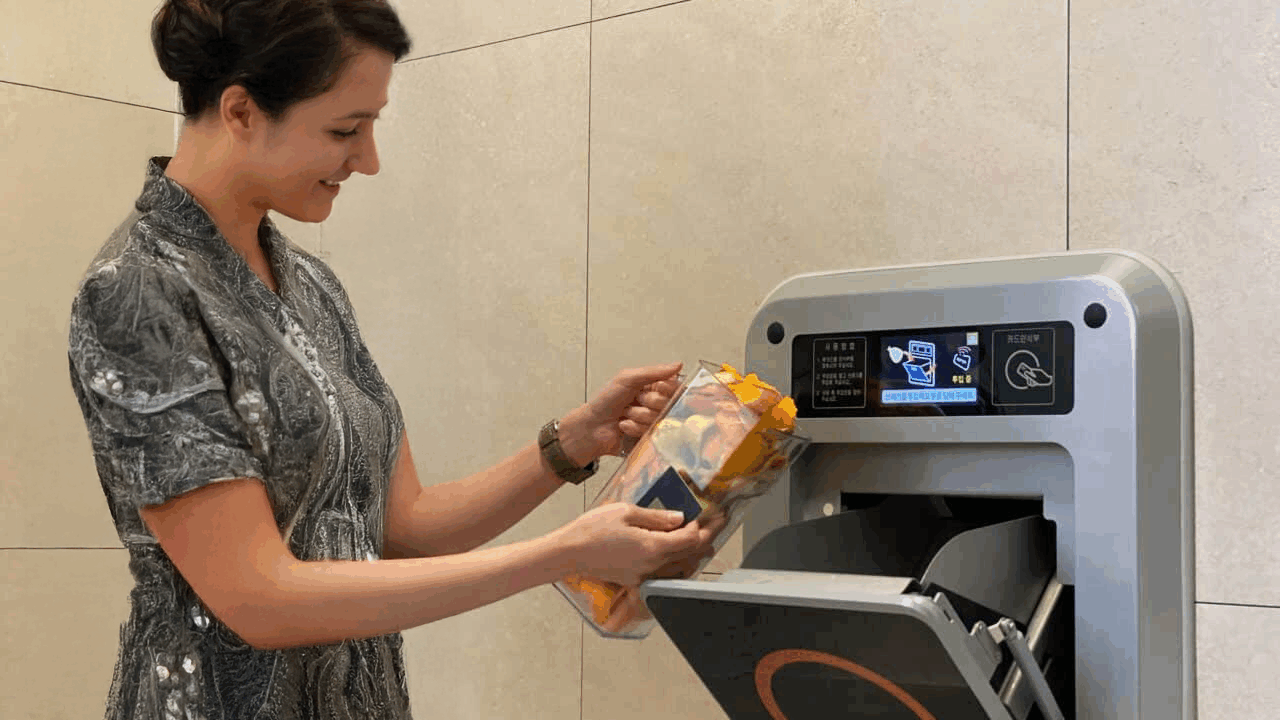
The PAYT (Pay As You Throw) strategy is an innovative approach to managing waste that promotes environmental awareness and individual responsibility. This system entails a fee that users pay based on the amount of waste they dispose of in designated containers for different types of waste. In essence, the more one throws away, the higher the cost.
Sustainability Upgrades & Retrofit
Traditional waste collection is costly, inefficient, and environmentally harmful. With rising labour expenses, health risks, and increasing pollution, the need for innovation has never been greater. Envac’s automated waste collection system offers a game-changing solution—reducing costs, cutting emissions, and boosting recycling rates. Through Energy Optimisation, Power Balancing, and End-user Engagement, cities like Stockholm and London are already seeing remarkable results. Discover how automation is transforming waste management and paving the way for a cleaner, more sustainable future.
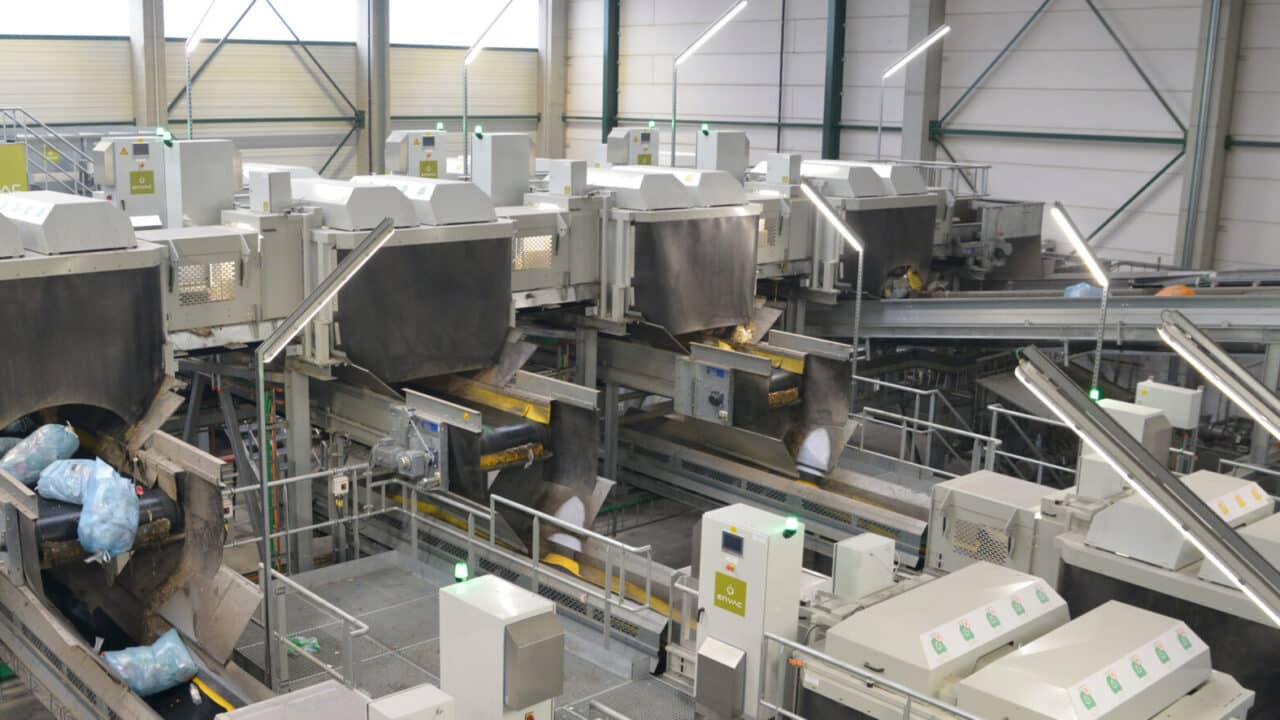
Optical waste sorting is a modern, efficient, and environmentally friendly method of recycling that utilises advanced camera systems, sensors, and machine learning algorithms to swiftly and accurately identify and sort various types of waste materials for efficient disposal or recycling.

Managing waste is a significant challenge for cities worldwide. Total global waste is estimated to reach 3.88 billion tonnes by 2050 as urban populations – and their waste – continue to grow.

A new Swedish study shows that roughly one third of household food waste can in fact be prevented – but also that large amounts of unavoidable, nutrient-rich food waste will always remain. This places high demands on smart collection systems that enable biogas production, circular nutrient flows and more resource-efficient cities, where Envac’s vacuum waste collection systems become a central part of the infrastructure.
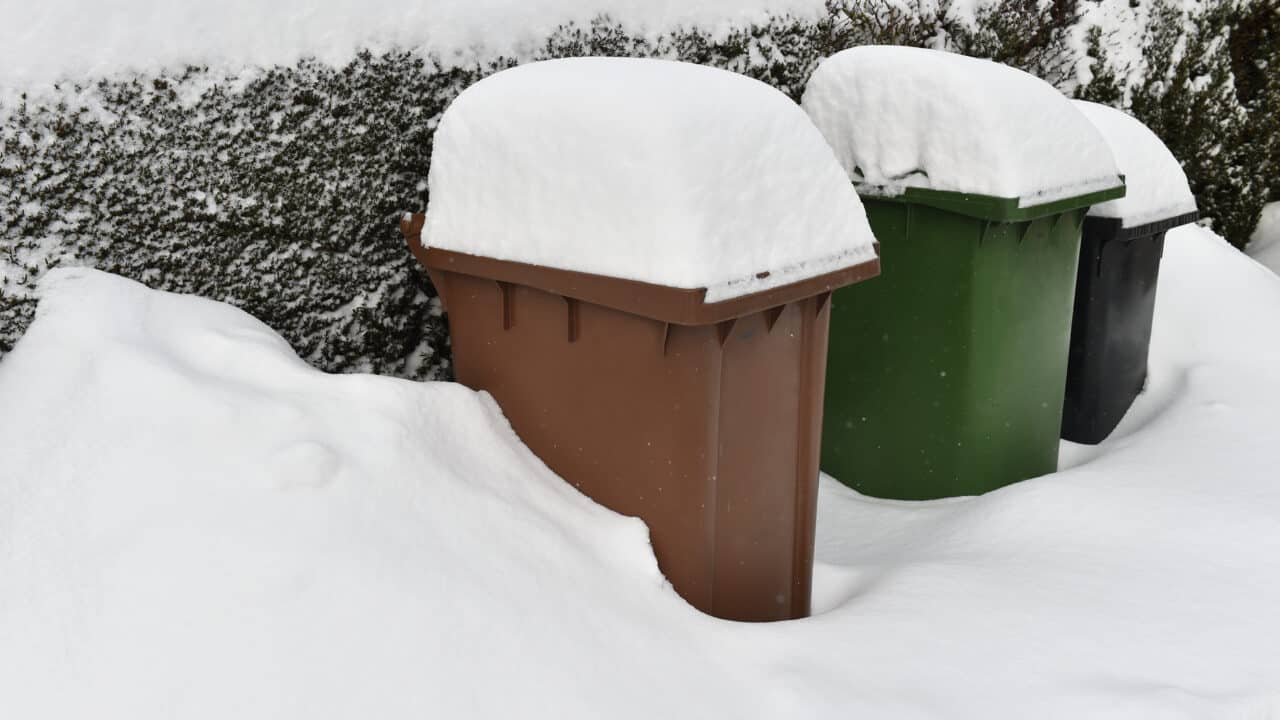
The snow chaos in Sweden was a clear reminder of how vulnerable a traditional, vehicle-heavy waste system is. When roads become blocked with snow, snowbanks build up and vehicles get stuck, it directly affects something as fundamental as being able to get rid of your waste. The result is overflowing bins, extra collection rounds, overtime work and residents who are forced to “wait before taking out the rubbish” because the collection simply has not made it through.