
Increase the risk of cross‑contamination in corridors, lifts, and wards

Healthcare providers face immense pressure to deliver high-quality care while maintaining a smooth patient flow, which is crucial for keeping healthcare-associated infections (HAIs) low and preventing nurse burnout. Additionally, there is a constant need to improve infection control, maximise clinical efficiency, and expand capacity—all while adhering to strict budgetary limits. However, an often-overlooked aspect that can undermine these goals is how hospitals manage their soiled flow logistics.
Traditional manual waste handling and traditional trolley-based corridor transportation logistics, or ex AGVs (automated guided vehicles):
Increase the risk of cross‑contamination in corridors, lifts, and wards

Consume valuable staff logistical time that could be redirected to patient care

Take up space for storage, bins, and transport routes, including elevators/lifts
Drive up operating costs through labour, maintenance, and inefficient flows
Automated waste collection changes that equation. By replacing carts/bins or AGVs with sealed pipe systems, hospitals can improve hygiene, streamline operations, and unlock measurable financial returns.
Waste and soiled linen impact more than logistics – they affect patient throughput, contingency, resilience and infection control issues. Across the globe, millions of healthcare‑associated infections (HAIs) each year lead to extra hospital days and billions in added costs. A significant share of these infections is linked to poor handling of waste and soiled materials, as well as to unnecessary exposure of staff and patients to contaminated flows.
Envac’s ROI Calculator for healthcare uses key hospital characteristics to estimate both the payback period and operational benefits of an automated system.
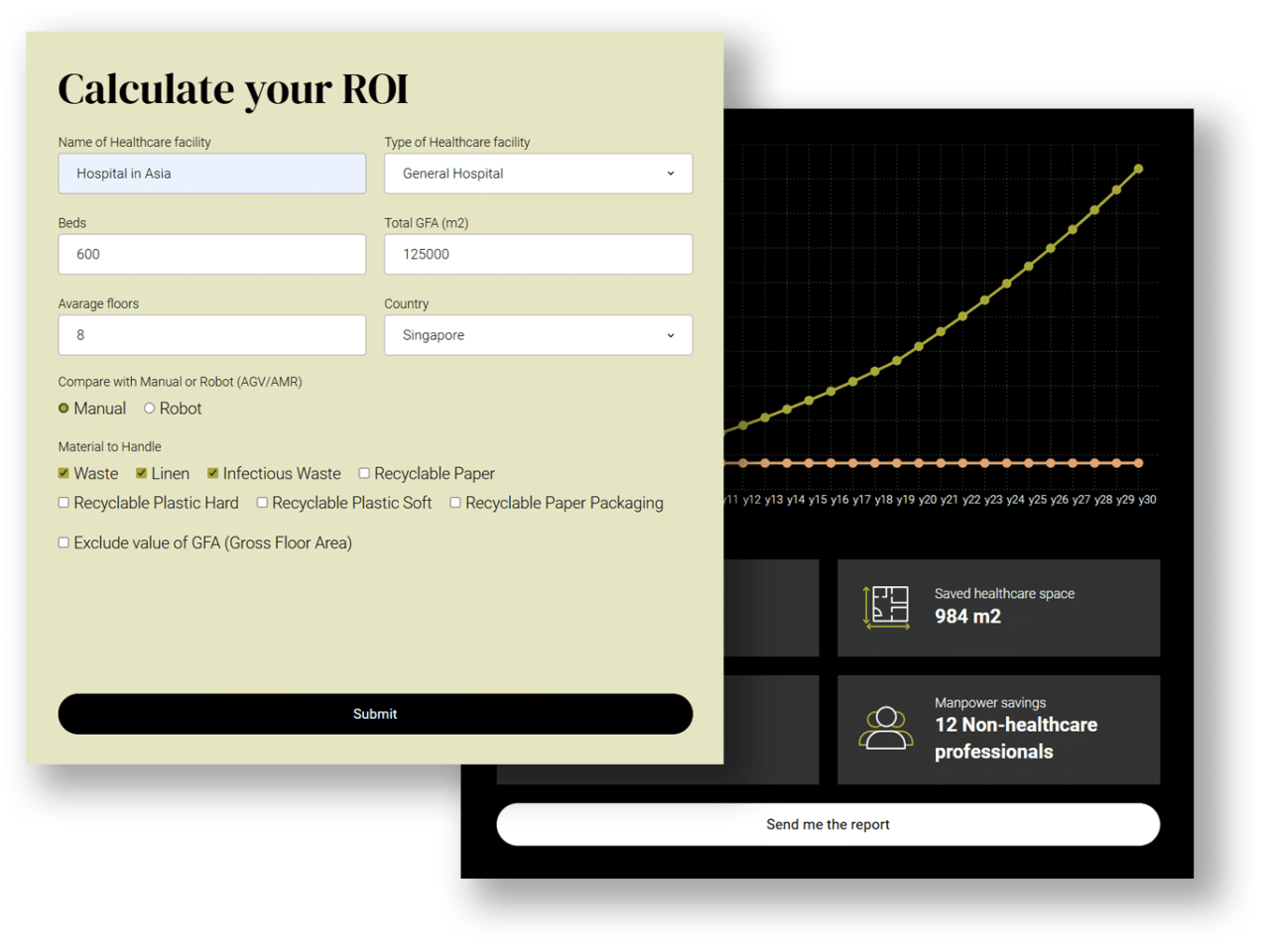
Inclusion or exclusion of GFA value – whether to factor in the monetary value of the space that can be freed when storage rooms, waste rooms, and transport routes are reduced. (This factor depends on and varies with greenfield or retrofit projects)
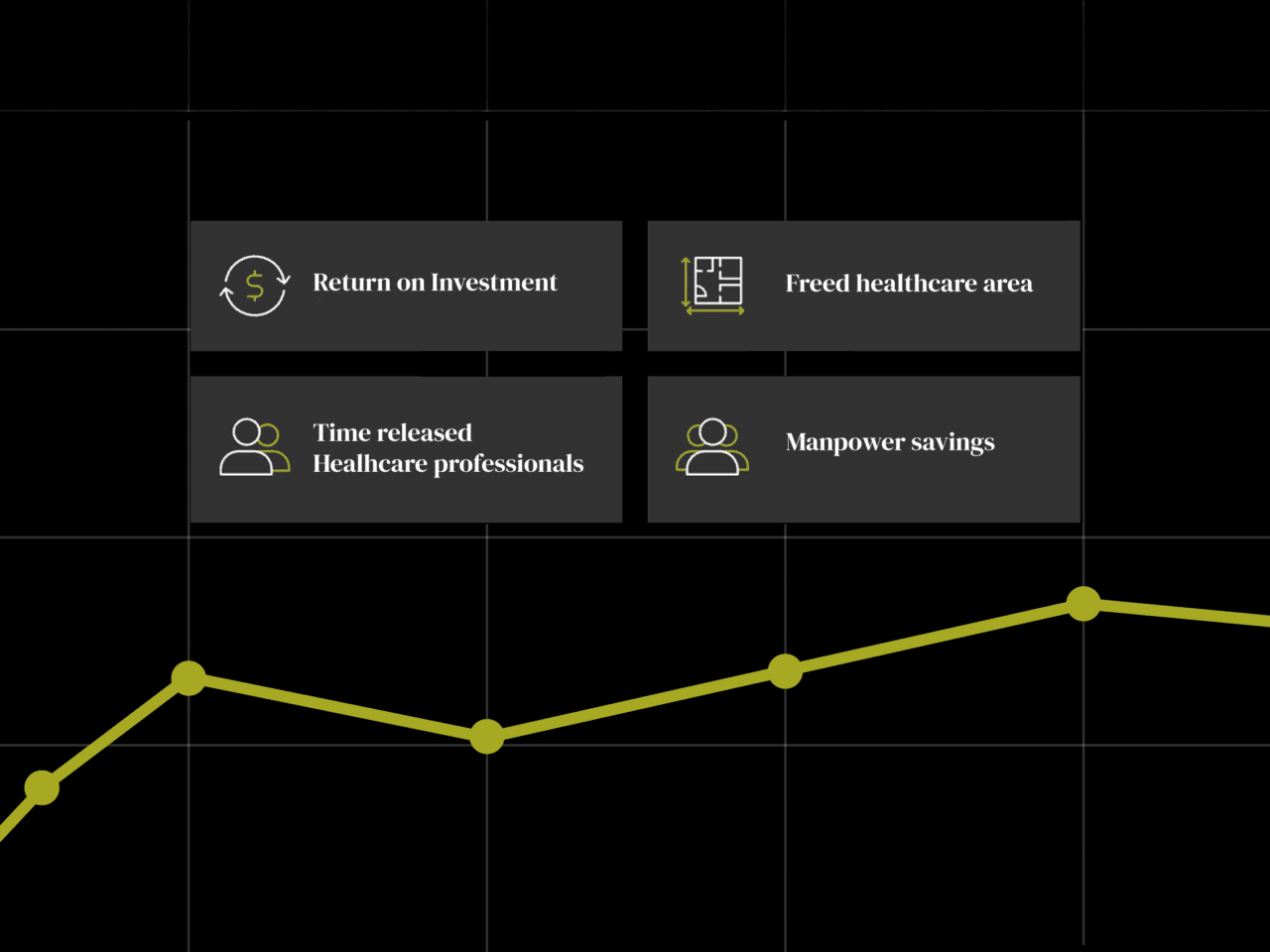
Using these inputs, the calculator models the difference between a chosen alternative solution (manual or robotic) and an Envac system in terms of:
The result is a clear view of what automated waste collection could mean for a specific hospital context.
To illustrate how the ROI Calculator works, the following scenario demonstrates a typical case.
For this 600‑bed hospital, the calculator shows:
These numbers will vary by market, wage levels, space costs, and configuration, but they illustrate a typical pattern:
While the calculator uses internal engineering and economic models, the outcome is simple: it turns complex infrastructure decisions into clear, comparable numbers for stakeholders.

The ROI Calculator serves as a starting point for discussion rather than a final investment decision, helping healthcare organisations evaluate potential returns. It’s important to note that the ROI is based on established guidelines for post-pandemic hospital design and safe working environments, rather than constrained construction budgets. This focus prioritises patient safety and care quality while supporting sustainable infrastructure.
From there, Envac’s team can refine the analysis with project‑specific design details, local pricing, phasing, and integration with other hospital systems.

When waste and soiled linen handling are priorities
By entering a few basic details about a facility, Envac’s ROI Calculator will show
– How quickly an automated waste system could pay for itself –
– How much space can be freed for clinical use –
– How much non healthcare staff time can be released from low‑value tasks –
– How a current solution compares to a future‑proof, automated alternative –
Facilities can model their own scenarios to see what automated waste collection could deliver for a hospital.

Automating Clean: How Waste Technology is Reshaping Hospital Hygiene Hospitals have always been built around care. Yet behind the scenes, one of the most overlooked /../

The True Cost of Manual Waste Handling in Hospitals Hospitals face constant pressure to improve safety, reduce costs, and create cleaner environments for patients and /../

Healthcare-associated infections cost billions each year, often driven by how hospitals handle waste and linen. Envac’s sealed pipe system eliminates manual handling, reduces bacterial spread, and supports smarter, safer hospital design, with over 180 installations worldwide