Smart City Sustainability

Designing Cities for the Future: Why Waste Belongs Underground

Waste collection in city

Designing Cities for the Future: Why Waste Belongs Underground

Cities are growing taller and denser than ever before. Yet many still rely on outdated waste systems that were designed for a smaller, slower world. Trucks clog narrow streets, bins overflow, and emissions rise with every collection. These systems work against the vision of the modern, sustainable city.

Forward-thinking municipalities are changing that by placing waste where it belongs: out of sight and underground. Automated waste collection uses a network of vacuum pipes that carry waste from smart inlets across a district to a single, remote collection station.

This approach eliminates most truck traffic, reduces emissions, and keeps streets free from bins and litter. It also makes public spaces cleaner and quieter, improving both quality of life and urban aesthetics.

In cities that have adopted this model, such as Stockholm and Seoul, emissions from waste collection have dropped dramatically, and residents enjoy safer, more pleasant environments. Property developers benefit too, as automation increases land value and helps projects meet sustainability certification standards.

Waste is one of the most visible signs of how a city runs. Moving it underground sends a clear message: this is a place that values clean design, sustainability, and innovation.

The future of city living is smarter, cleaner, and more connected. Automated waste collection is helping make that future a reality today.

Related articles

Smart City Sustainability

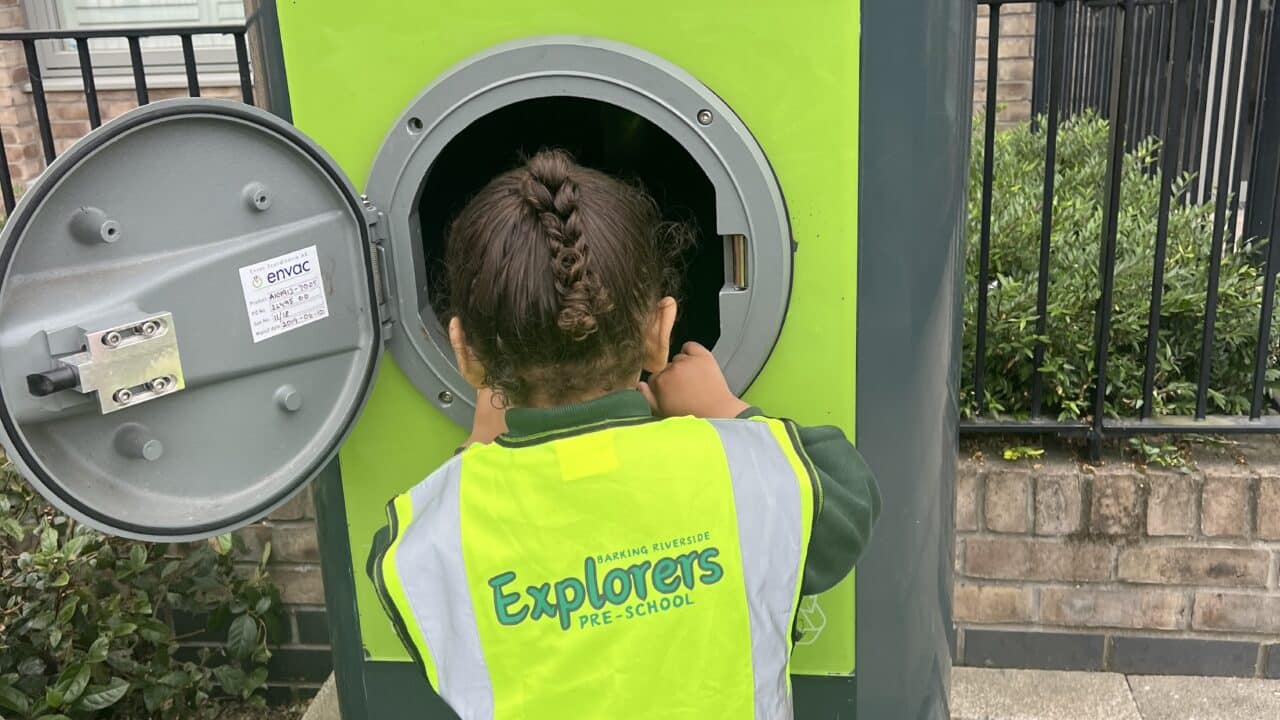
Turning a terminal into a community hub: How explorers preschool is reimagining The Wilds at Barking Riverside

At The Wilds, a multi-purpose community, ecology and events space delivered by Barking Riverside Limited, the Envac terminal is not tucked away in an anonymous shed. Instead, it sits within an award-winning building that also houses workspaces (where the Envac UK office is also located), a local café, events and, importantly, an inclusive early years setting: Barking Riverside Explorers Preschool, part of the SENspired family of services.

Read more

Sustainability

Designing cities for circularity and resilience

Cities are where the world’s biggest challenges and opportunities converge. They occupy just 2% of the Earth’s land, yet house half the global population and generate around 80% of emissions. In a time of accelerating climate change and geopolitical instability, cities are becoming the testing ground for whether we can secure clean air, reliable infrastructure and social stability. In 2025, Envac appointed its first Chief Sustainability Officer, underlining the strategic importance of sustainability for our future growth and long‑term competitiveness.

Read more

Smart City

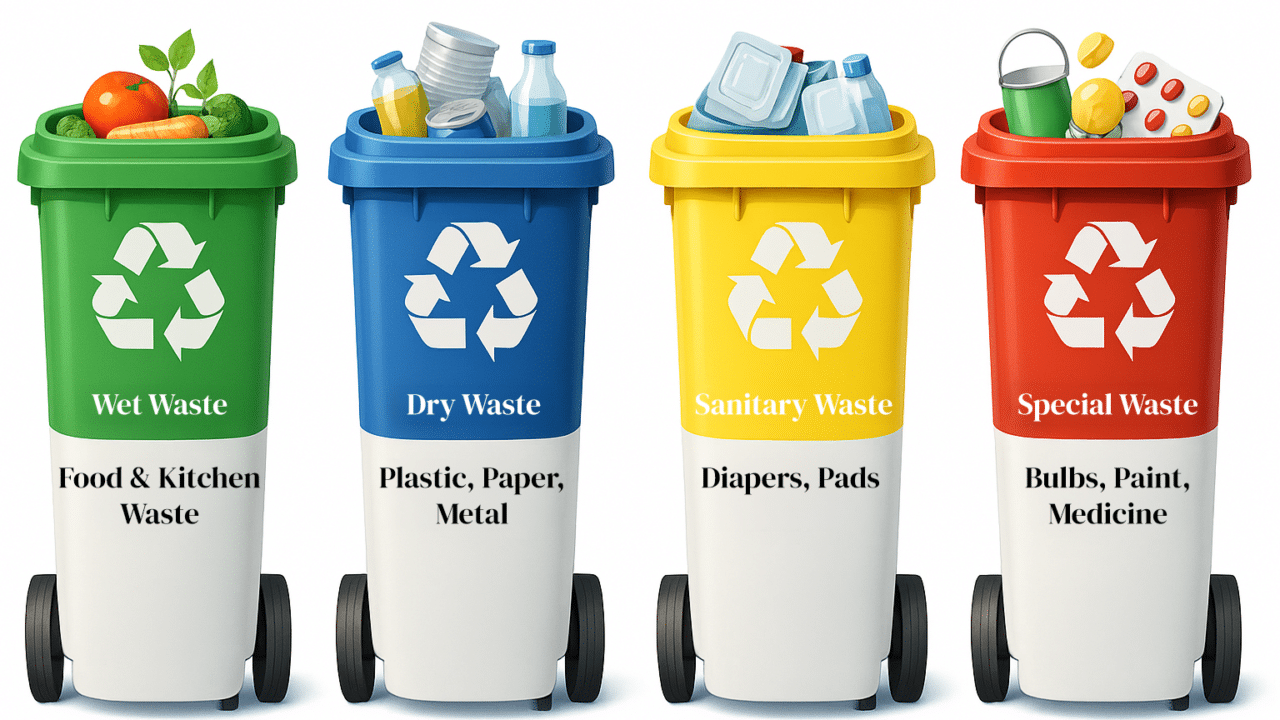
India’s Solid Waste Management Rules, 2026: What decision makers and end users need to know

India’s Solid Waste Management (SWM) Rules 2026 replace the 2016 framework and make four‑stream segregation, digital tracking and strict accountability mandatory for all waste generators. From 1 April 2026, only non‑recyclable, inert waste can go to landfill, while mixed waste and poor segregation will be penalised through higher fees and sanctions. The rules place a particular focus on bulk waste generators such as large residential complexes, commercial centres, hospitals, universities and airports, which together account for about 30% of urban waste. Automated, closed‑loop collection and data‑driven systems give cities and developments a practical path to comply while improving hygiene, reducing environmental impact and future‑proofing investments.

Read more